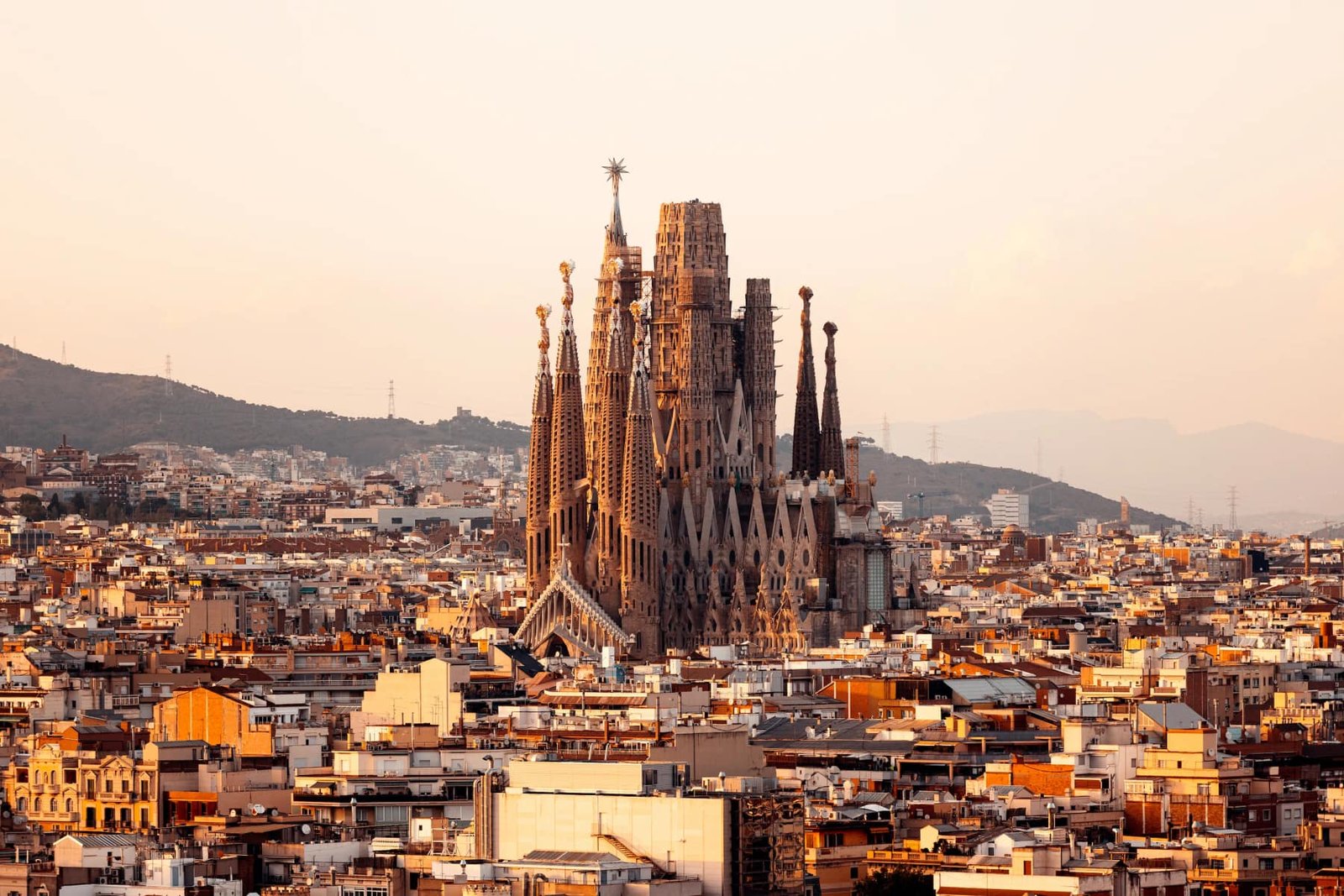
See the light through the Sagrada Família’s glass
Gaudí began in 1883, knew he would never finish, and designed accordingly. The interior is a stone forest lit through glass graded from cold blues on one side to hot reds on the other.
The columns branch as they rise, splitting into limbs that carry the vaults — Gaudí took the structure from trees and worked it out with hanging chain models rather than calculation. It is why the interior feels organic rather than engineered, and why almost nothing in it is a right angle.
The glass is oriented deliberately. Morning sun comes through the eastern Nativity side in blues and greens; the afternoon comes through the western Passion side in oranges and reds, and floods the nave with colour that moves across the stone as the hour changes. The two hours around sunset are the ones to book.
The three facades are stylistically unlike each other on purpose. The Nativity front, the only one largely completed in Gaudí’s lifetime, is dense and encrusted; the Passion front, carved much later by Subirachs, is angular and deliberately harsh.
Good to Know
Availability, exact timings and pricing depend on your itinerary, hotel and season — your Finders & Keepers Safaris specialist will confirm details and slot this experience into your existing day-by-day plan.
Time it for the light, and book the towers separately
Which glass is lit depends entirely on the hour, so the time on your ticket changes what you see — late afternoon for the reds. Tower access is a separate timed ticket, involves a lift up and a tight spiral stair down, and is not for anyone uneasy with heights or confined spaces. It is a working church: shoulders and knees covered.