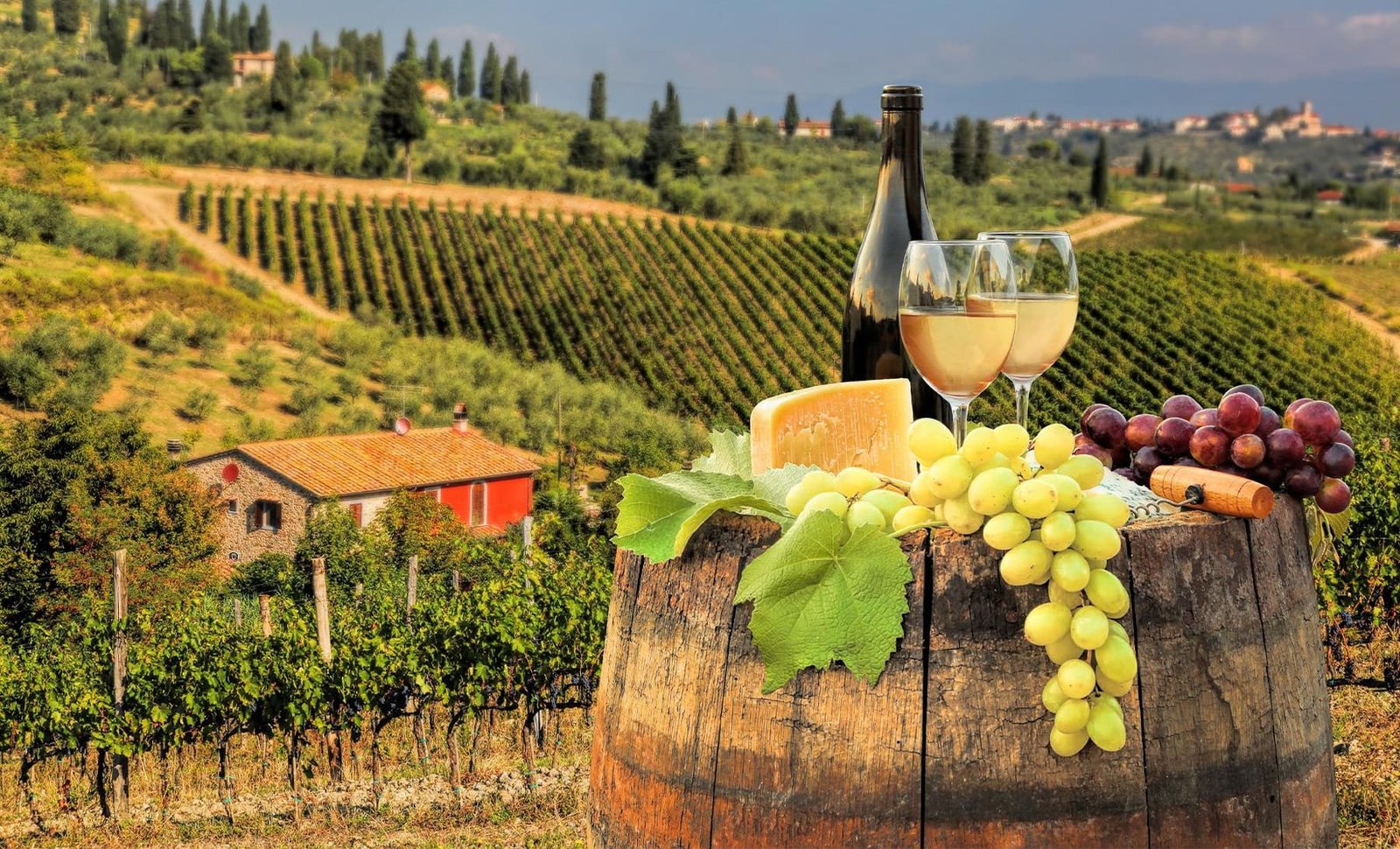
Taste Chianti Classico at a family-owned estate
The black rooster on the neck of the bottle marks the historic zone between Florence and Siena. A morning at a family estate is the difference between drinking Chianti and understanding it.
Chianti Classico is a smaller and stricter appellation than Chianti at large: a defined territory, at least eighty per cent Sangiovese, and minimum ageing that steps up through Riserva and Gran Selezione. The gallo nero emblem comes from a medieval story about how Florence and Siena settled the border between them, and it is now the consortium’s mark.
At a family estate you will usually be walked through the vineyard, the cellar and the ageing room by someone whose surname is on the label. That matters because the interesting questions here are about choices — which clones, how much oak, whether to declassify a difficult vintage — and only the person who made them can answer.
Tastings are normally poured alongside food rather than in isolation, which is the right way round for Sangiovese: high acidity and firm tannin make far more sense with pecorino, salumi and a bowl of ribollita than they do on their own.
Good to Know
Availability, exact timings and pricing depend on your itinerary, hotel and season — your Finders & Keepers Safaris specialist will confirm details and slot this experience into your existing day-by-day plan.
Harvest is the one time to plan around
September and early October are vendemmia, and while the estates are at their most alive they are also at their busiest — visits are shorter and the winemaker may not be free. Spring and late autumn give you more of their time. Estates sit down winding gravel roads, so we arrange a driver; you are here to taste, not to nominate someone who cannot.