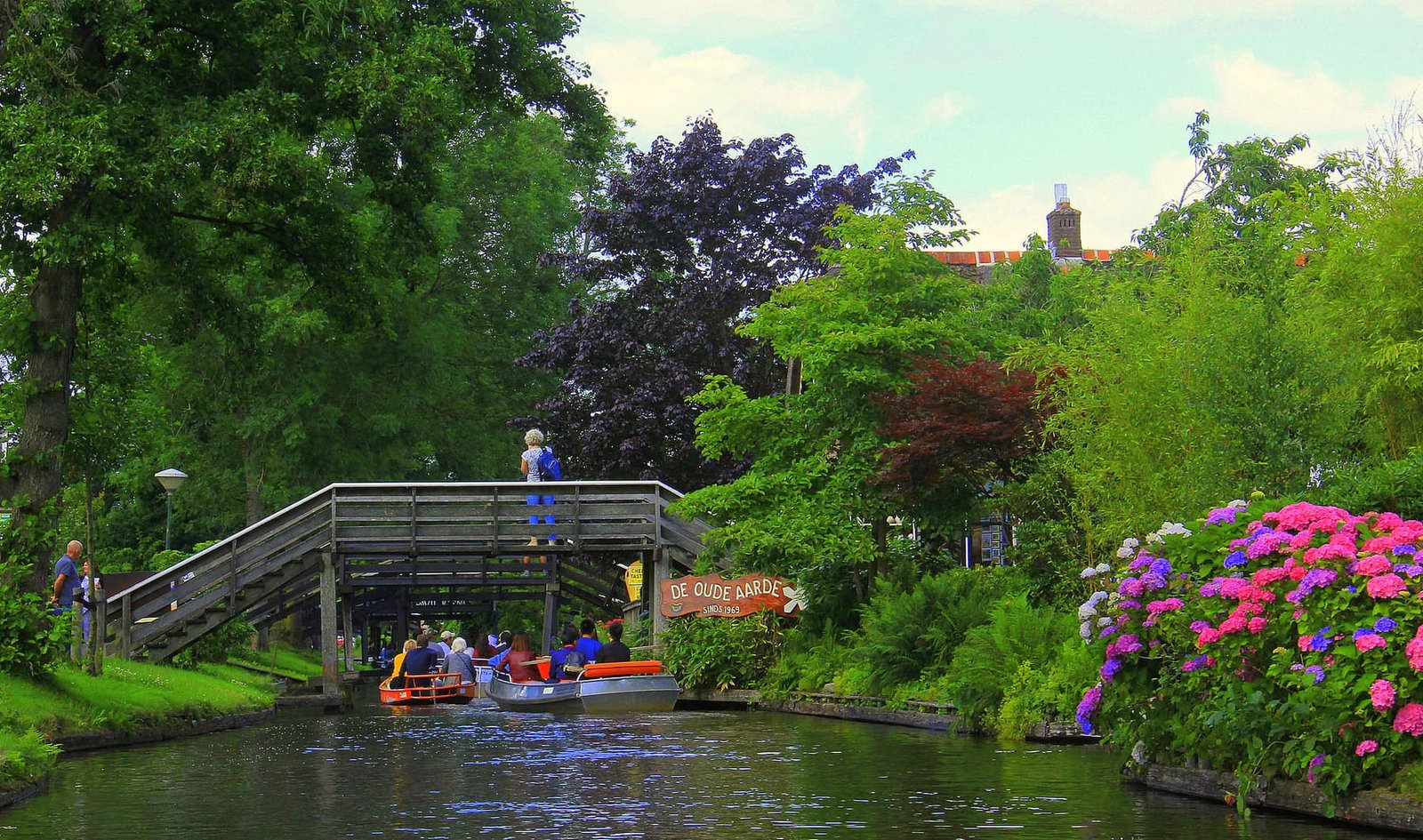
Glide the canals of a village with almost no roads
A village built along waterways instead of streets, with thatched farmhouses on their own islands and arched wooden footbridges between them. The traffic is boats, and the quiet ones are electric.
Giethoorn exists because of peat. Diggers stripped the ground for fuel from the thirteenth century onward, and the trenches they left filled with water and became the canals. The spoil made the islands the houses stand on. The name comes from the goat horns the first settlers found in the bog.
The boats to take are fluisterboten — whisper boats, electric and near-silent, which you can steer yourself. Louder craft are restricted, which is why the village stays as still as it does. There are around 180 bridges, all wooden, all arched high enough to pass under.
Immediately beyond the village is Weerribben-Wieden, the largest peat marsh in northwestern Europe, with reedbeds, otters and marsh harriers. A boat out into the reserve is the half of the day most visitors skip.
Good to Know
Availability, exact timings and pricing depend on your itinerary, hotel and season — your Finders & Keepers Safaris specialist will confirm details and slot this experience into your existing day-by-day plan.
Get there before the coaches
Giethoorn receives a very high volume of day visitors for its size, and between about eleven and four in summer the main canal is congested. First thing in the morning it is close to silent, which is the entire point of coming. The houses are private homes on private islands — stay on the water and the public paths.