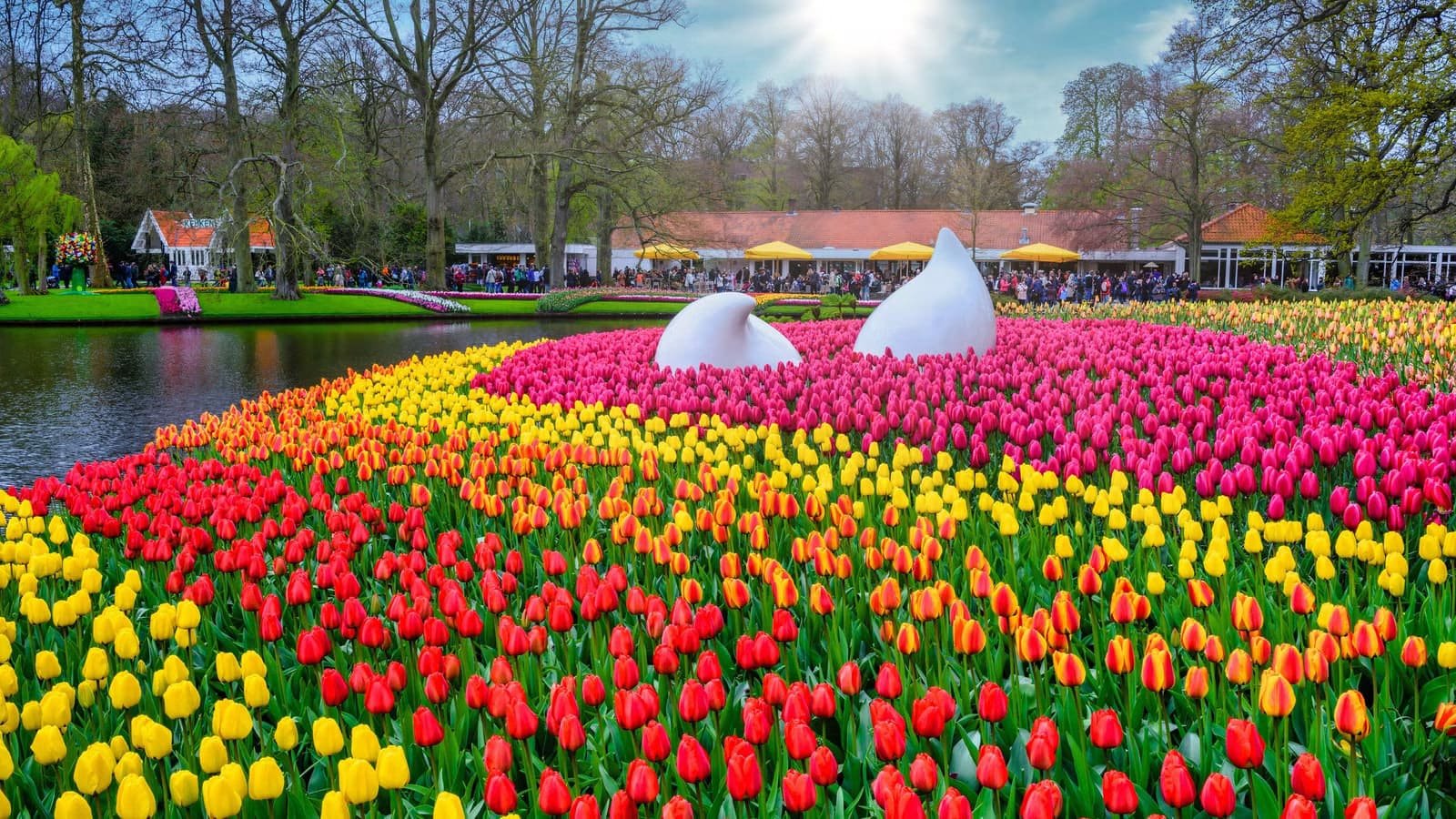
See seven million bulbs in flower at the Keukenhof
Thirty-two hectares of planted parkland that opens for roughly eight weeks a year and then closes completely. Around seven million bulbs go in by hand each autumn for a single spring.
The gardens were laid out in 1949 on the estate of a fifteenth-century castle — the name means kitchen garden, which is what the grounds originally were. It exists as a showcase for the Dutch bulb industry, so what you are walking through is effectively a trade exhibition that happens to be beautiful.
Everything is replanted annually. Bulbs are set in layers so that different varieties peak in sequence, which is why the gardens look planted whether you come in the third week of March or the second week of May. Beyond the tulips there are hyacinths, daffodils, orchids and roses under glass in the pavilions.
The commercial bulb fields around Lisse are a separate sight and a different one — solid blocks of single colour running to the horizon. They are private farmland, best seen from a bicycle on the lanes between them, and they are cut early once the bulb has taken what it needs.
Good to Know
Availability, exact timings and pricing depend on your itinerary, hotel and season — your Finders & Keepers Safaris specialist will confirm details and slot this experience into your existing day-by-day plan.
Eight weeks, and then it is gone
Keukenhof opens from around late March to mid-May and is shut the rest of the year, so this one dictates your dates rather than fitting around them. Peak bloom is usually mid-April but moves with the winter. Weekends and the Easter period are extremely busy; a weekday at opening is a different place. The bulb fields are working farms — look from the lane, do not walk in.