Rotorua’s living culture
A Māori cultural performance in a carved meeting house, a hāngi cooked beneath the earth, and the New Zealand Māori Arts and Crafts Institute at Te Puia.
Māori culture at Te Puia, geysers and mud pools, the Southern Alps and a cruise through Milford Sound
See Pricing & Inclusions ↓OverviewThe definitive New Zealand introduction — from the coastal city of Auckland to the geothermal and cultural heart of Rotorua, from the adventure capital at Queenstown to the fiords of Fiordland National Park, and finally to Christchurch. Māori culture, dramatic alpine landscape and the natural beauty that makes this one of the most treasured countries on Earth.
| Best For | First-time visitors to New Zealand, couples and active travellers |
| Duration | 10 Days / 9 Nights |
| Route | Auckland → Rotorua → Queenstown → Milford Sound → Christchurch |
| Group Size | Private or small group — guided throughout |
| Price From | $14,600 per person sharing |
Auckland’s volcanic cones, Mount Eden and the black-sand beaches of the west coast
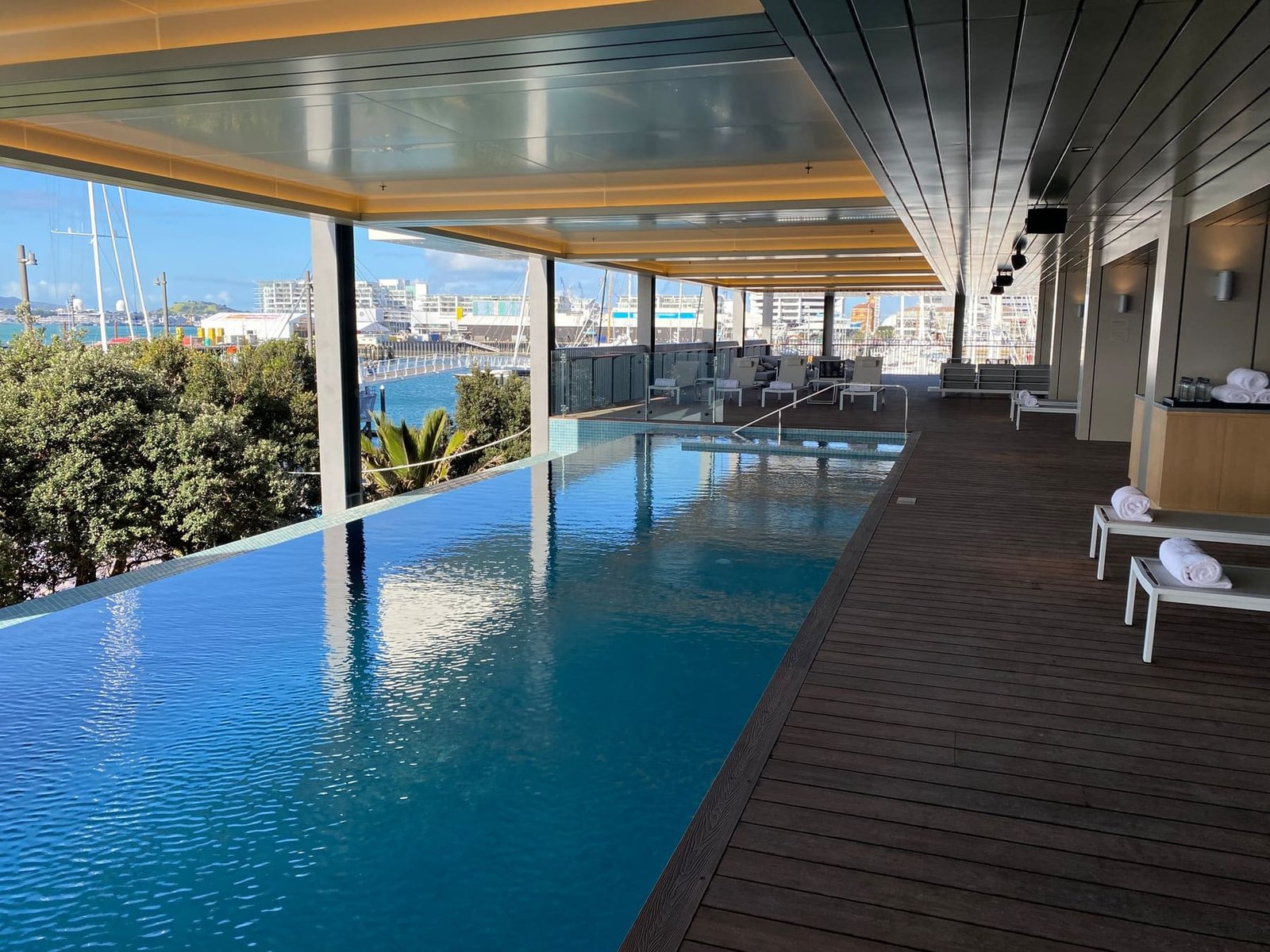
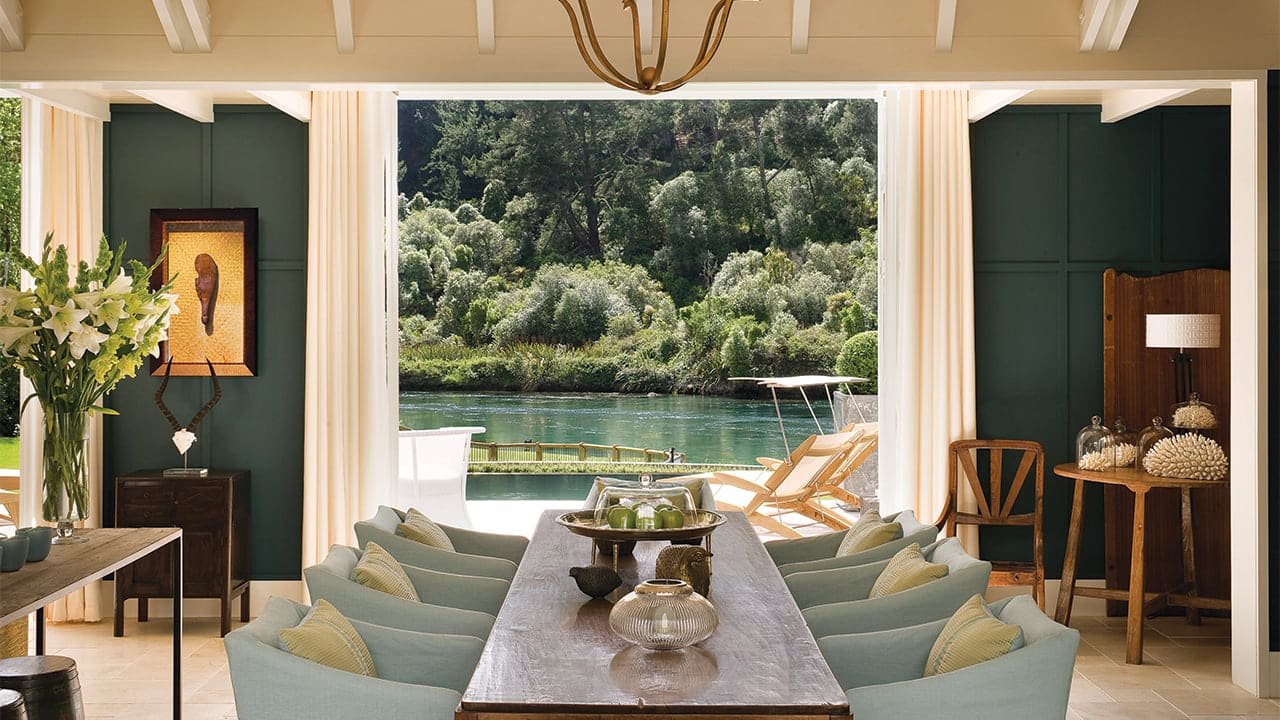
Two nights at Huka Lodge, on the banks of the Waikato River
Te Puia — the Pōhutu Geyser, the largest active geyser in the southern hemisphere
A Māori cultural performance in a carved meeting house, and a hāngi cooked beneath the earth
The New Zealand Māori Arts and Crafts Institute, and the Kiwi Conservation Centre
Wai-O-Tapu — the Champagne Pool, the Artist’s Palette and the Devil’s Bath
The Redwood Forest by canopy walk or zipline
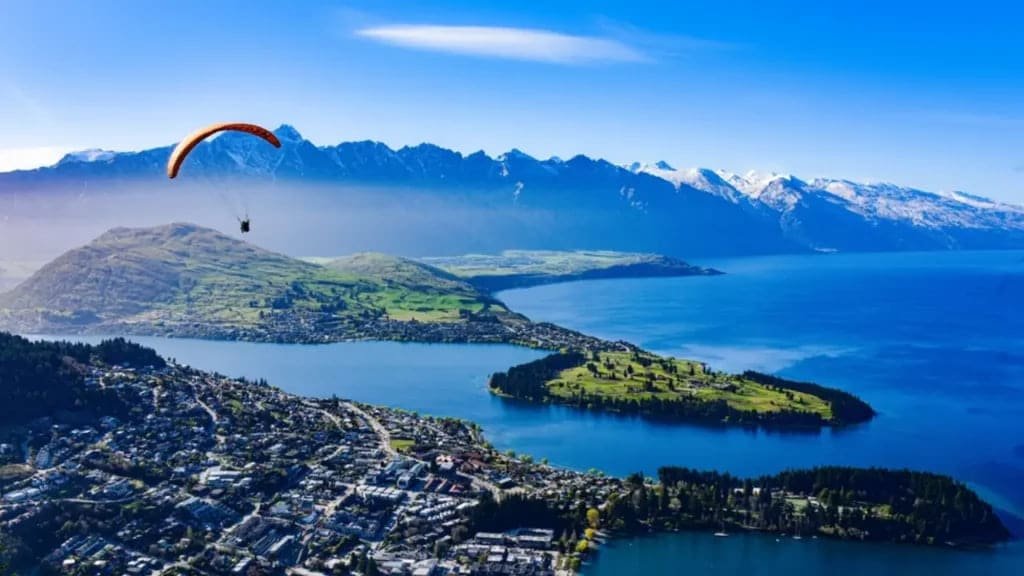
Queenstown, Lake Wakatipu and the Skyline gondola to Bob’s Peak
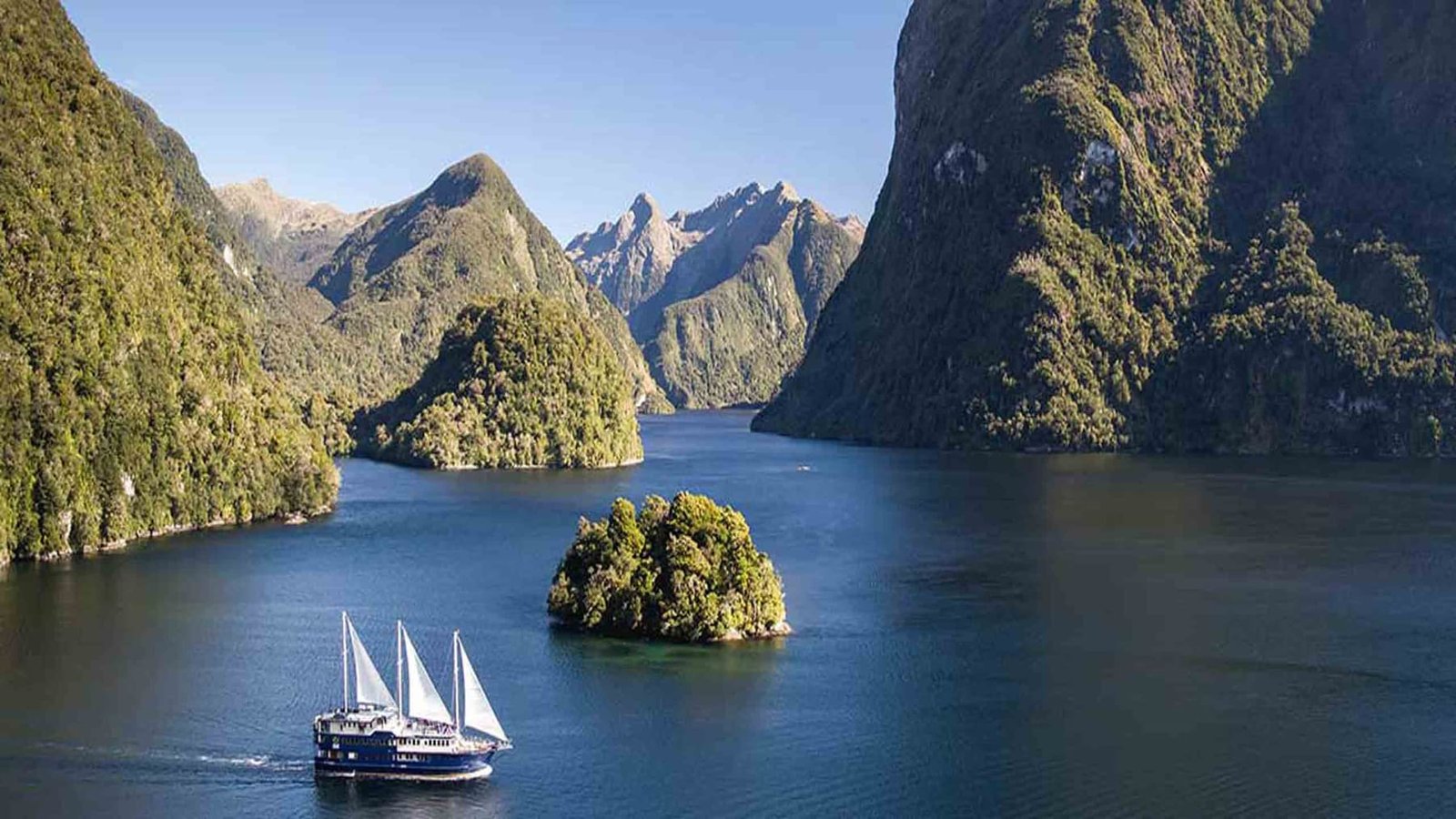
Fiordland National Park and a cruise through Milford Sound
Lake Tekapo and the Church of the Good Shepherd, schedule permitting
Auckland → Waitākere Ranges → Rotorua → Queenstown → Milford Sound → Te Anau → Christchurch. Day-by-day scrollspy markers to follow.
Land at Auckland International and transfer to the Park Hyatt on the Waitematā Harbour waterfront, looking across to the Hauraki Gulf.
Auckland is built on a field of extinct volcanoes, and the cones dotted through the suburbs are a constant reminder of the geology underneath. The Sky Tower rises over everything, and the harbour is full of boats — there are more per head here than anywhere in the world.
The evening walks the waterfront: the Viaduct Harbour, where superyachts and fishing boats share the water; the Wynyard Quarter with its restaurants and public art; and Queen Street. Dinner is New Zealand seafood — Bluff oysters, green-lipped mussels or crayfish — with a Marlborough Sauvignon Blanc or a Central Otago Pinot Noir.
The morning explores Auckland’s volcanic landscape. Mount Eden — Maungawhau — is the highest cone in the city, with a deep crater at the top and a view across both harbours. The Auckland Museum, in its neoclassical building in the Domain, holds one of the great collections of Māori and Pacific taonga, and the daily cultural performance is a good introduction before Rotorua.
Along the waterfront to Mission Bay, looking out to Rangitoto — the youngest volcano in the field, and the one that dominates the harbour. Then the ferry to Devonport, a Victorian village on the North Shore with the city skyline behind it.
The afternoon crosses to the west coast and the Waitākere Ranges, a regional park of dense native forest running down to black-sand beaches where the Tasman comes in hard. The contrast with the calm eastern harbours, twenty minutes away, is total.
South about three hours through the Waikato’s farmland and forest to Rotorua, one of the most culturally significant regions in the country. Check in at Huka Lodge, on the banks of the Waikato surrounded by manicured gardens and native bush.
The afternoon is Te Puia, where Māori culture and geothermal activity meet in one place. The Te Whakarewarewa valley holds the Pōhutu Geyser, the largest active geyser in the southern hemisphere, which throws steam and water up to 30 metres. Around it, bubbling mud pools and steaming vents make the ground itself feel provisional.
The New Zealand Māori Arts and Crafts Institute is on site, where master carvers and weavers work and teach, and the Kiwi Conservation Centre keeps the national bird in a purpose-built nocturnal enclosure. The evening is a pōhiri welcome, waiata, poi and haka in a carved meeting house, and a hāngi — a feast cooked in the ground using geothermal heat.
Wai-O-Tapu means sacred waters, and after ten minutes in it the name makes sense. It is among the most spectacular geothermal areas anywhere. The Lady Knox Geyser erupts daily at 10:15 at a separate location, reaching 10 to 20 metres, so you arrive early.
The Champagne Pool is the centrepiece: the largest hot spring in the park, ringed in brilliant orange, with carbon dioxide rising through it in a constant fizz. The Artist’s Palette shifts colour with mineral content across a series of pools, and the Devil’s Bath is a startling green that comes from arsenic. Three walking loops of 30, 50 and 70 minutes let you choose the depth.
The afternoon is the Redwood Forest at Whakarewarewa, a stand of Californian redwoods planted in the early 20th century that now tower over the native understorey — explored by canopy walkway on suspended bridges, by zipline, or on the mountain-bike trails.
A flight of about two hours south across the Cook Strait, descending into the Southern Alps — and the approach into Queenstown is one of the more dramatic commercial landings anywhere.
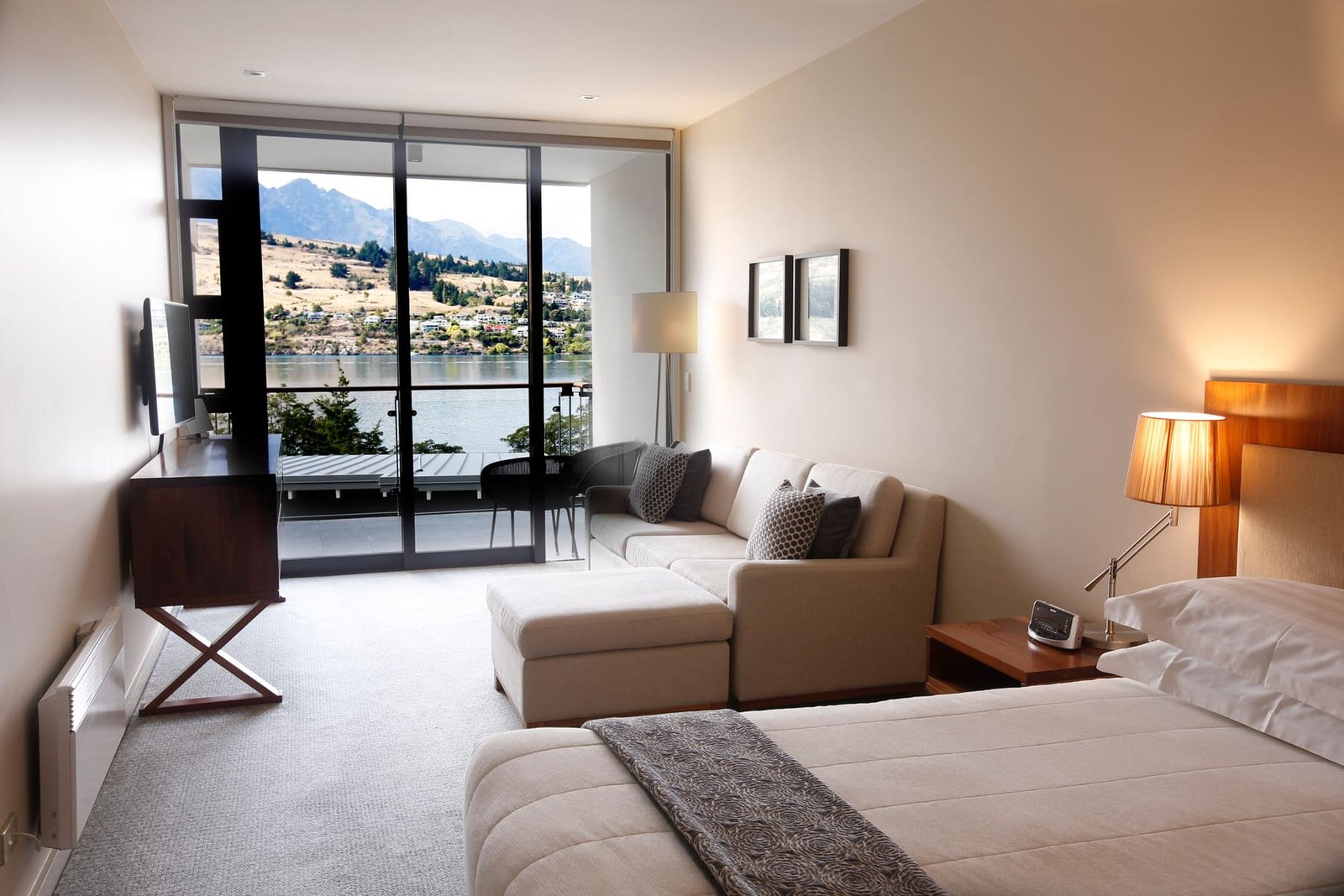
Check in at The Rees, on Lake Wakatipu with the Remarkables filling the window. The afternoon explores the town: the lake itself, glacier-carved and bent like a finger; the Queenstown Gardens on their peninsula; and the Skyline gondola up to Bob’s Peak, 450 metres above the town, for the view over the lake and the ranges.
Dinner overlooks Lake Wakatipu, with Central Otago wine.
Queenstown invented commercial bungy jumping and has never quite calmed down. The day is yours to shape: jet boating through the Shotover Canyon, where the walls come at you on both sides; a bungy from one of the original sites at the Kawarau Gorge; ziplining above the town; skydiving over the Remarkables; or white-water rafting on the Shotover or the Kawarau.
The luxury alternative is a private scenic helicopter over the Southern Alps and the glaciers, landing on a remote peak or on the ice itself. Snow-capped mountains, alpine lakes and glacier fields with nobody else in them.
The evening is free — the Onsen Hot Pools at Arthurs Point, with indoor-outdoor tubs over the Shotover canyon, are best booked for sunset.
An early departure from Queenstown into Fiordland National Park, part of the 2.6-million-hectare Te Wāhipounamu World Heritage Area and one of the great wilderness regions on Earth. The drive is half the experience: the Eglinton Valley, carved flat by ancient glaciers; the Mirror Lakes, which do exactly what the name says on a still morning; and the Homer Tunnel, bored straight through solid rock.
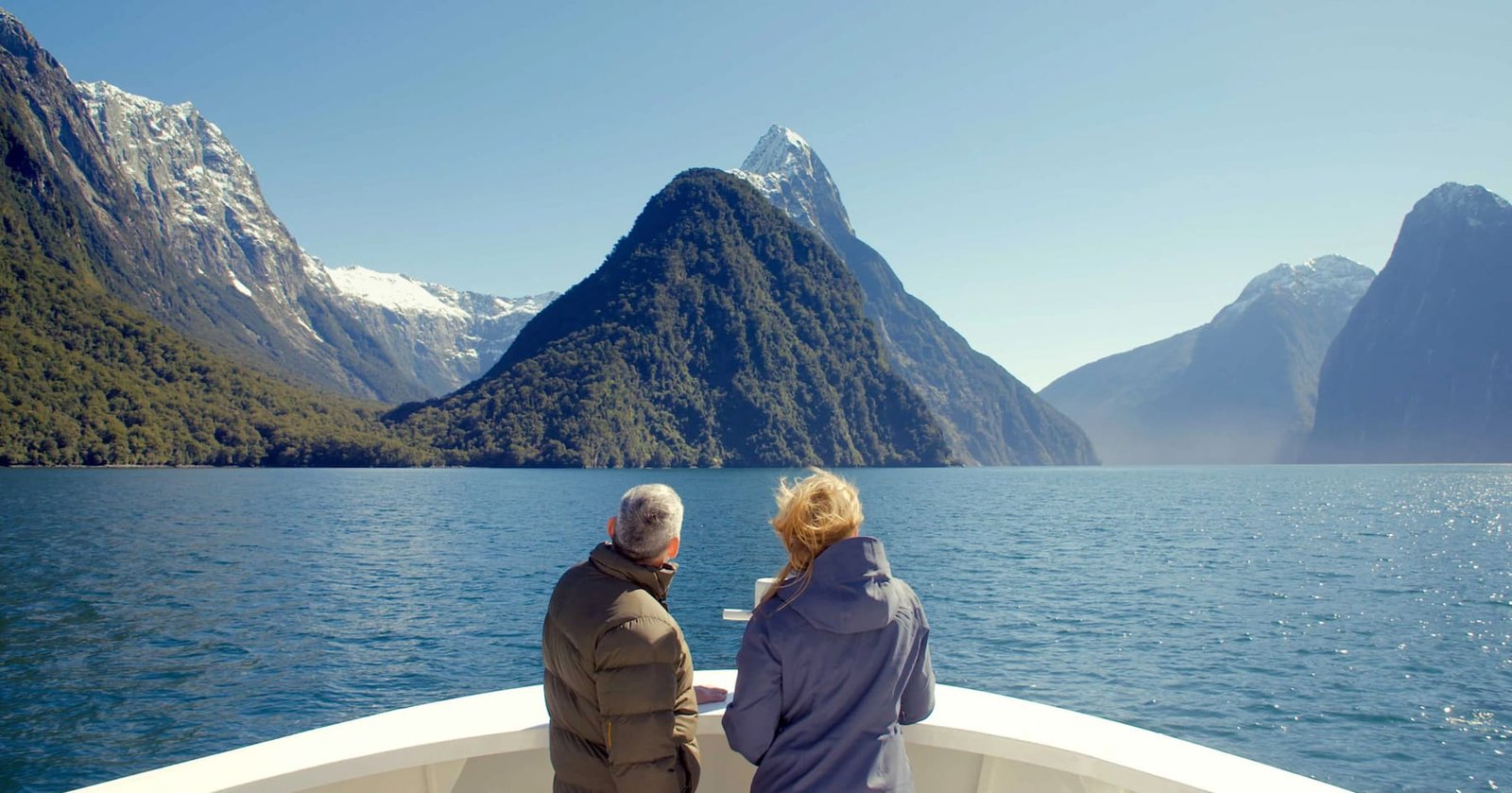
Then the cruise itself, through Milford Sound — Piopiotahi — where cliffs rise vertically out of the water and waterfalls come off them in every direction. Mitre Peak stands 1,692 metres straight up from the sea and is the most photographed mountain in the country. Stirling Falls and Fairy Falls are close enough to feel the spray.
Rainforest clings to the rock at impossible angles. New Zealand fur seals lie on the ledges, bottlenose dolphins ride the bow wave, and Fiordland crested penguins — among the rarest in the world — nest along the shore between July and November. The cruise runs out to the open Tasman Sea and back.
The afternoon continues to Te Anau, the gateway township for the park, and Fiordland Lodge on the edge of the national park with the lake below it.
North through the South Island. The road from Te Anau to Queenstown is among the most scenic in the country, running through alpine valleys and along the shore of Lake Wakatipu.
From there you continue to Christchurch, by a combination of scenic flight and road transfer or by the road journey across the island, depending on the schedule.
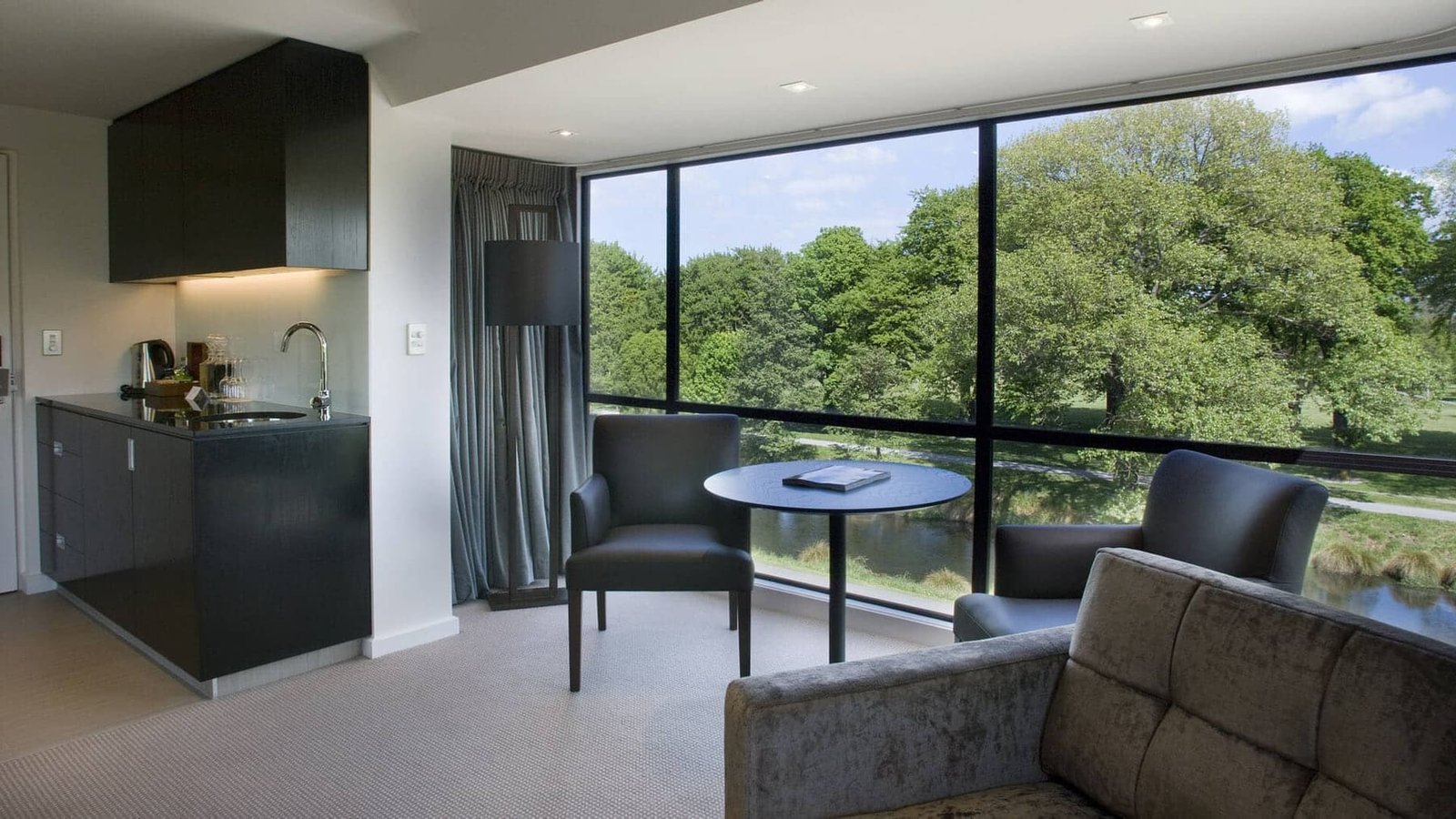
Check in at The George on the banks of the Avon. The evening explores the centre: the Botanic Gardens, the river, and Cathedral Square, which still carries the marks of the 2011 earthquake alongside a remarkable amount of rebuilding. The Riverside Market is the best place in the city to eat.
A private excursion through Canterbury — the farming heart of the South Island, where the plains run flat to the Southern Alps and braided rivers come down off the mountains in pale channels.
Where the schedule allows, the day reaches Lake Tekapo, which is an improbable milky turquoise from glacial flour suspended in the water, with the Alps behind it and the tiny stone Church of the Good Shepherd on its shore. It is one of the most photographed spots in the country, and it is also a Dark Sky Reserve.
Back to Christchurch for a farewell dinner — Canterbury lamb, South Island seafood and New Zealand wine.
Breakfast at the hotel and, if the flight allows, a last walk through the Botanic Gardens or a coffee by the Avon. Private transfer to Christchurch International Airport.
We are here for that. Every Finders & Keepers Safaris itinerary is a starting point, not a fixed departure — the pace, the lodges, the length, the dates and the party travelling can all be reshaped around you. Tell us what you would change and a specialist will rebuild the journey and price it honestly, before you commit to anything.
Tailor This Journey →
New Zealand end to end: Auckland’s volcanic cones, Māori culture and geysers in Rotorua, Queenstown and the fiords.
A Māori cultural performance in a carved meeting house, a hāngi cooked beneath the earth, and the New Zealand Māori Arts and Crafts Institute at Te Puia.
The Pōhutu Geyser, the Champagne Pool, the Artist’s Palette and the Devil’s Bath, with two nights at Huka Lodge on the Waikato River.
Queenstown and the Southern Alps, the cruise through Milford Sound from Fiordland Lodge, and a finish at The George in Christchurch.
Hold 2027 for half the usual deposit
Confirm any 2027 departure with a 15% deposit instead of the usual 30%, booked before 31 December 2026.
The same unforgettable journey, priced by season.
Reserve today with a low early deposit to lock in your 2027 dates and pricing.
Spread the rest across convenient instalments, at a pace that suits you.
Final balance due one month before departure — nothing more to pay once you fly.
Duffel, waterproof shell and a dry bag
Fiordland is wet, and that is the point
Milford Sound receives rain on roughly two days in three, and the cruise runs regardless — heavy rain brings hundreds of temporary waterfalls off the cliffs and is arguably the better experience. Adventure activities in Queenstown are weather- and operator-dependent, and the helicopter alternatives depend on cloud. Fiordland crested penguins are seen between July and November; whale, dolphin and seal sightings are natural and never guaranteed.
An NZeTA is required for visa-waiver nationalities
Private, tailor-made departures on your dates
A deposit of 30% is required to confirm your booking, with the balance due 60 days before departure. All itineraries can be tailored — extend a stay, add a destination, or adjust the pace to suit you. Comprehensive travel insurance covering trip cancellation, medical evacuation and personal effects is required for all guests. Your dedicated specialist remains on call throughout your journey for any changes or assistance you need.