Sunrise over the salt pans
A hot air balloon over the Makgadikgadi Pans, the world’s largest salt flats, then a private helicopter to Kubu Island, an ancient granite outcrop rising from the pan floor.
Solitude, silence, and ancient culture — Botswana's other face
See Pricing & Inclusions ↓OverviewThis is Botswana's other face — not water and floodplains, but salt and sand, an ancient sky and absolute silence. Over ten days, this circuit moves through the arid heart of southern Africa: the world's largest salt pans at Makgadikgadi, the sacred baobabs of Kubu Island rising from the pan floor, and five nights deep in the Central Kalahari Game Reserve — one of the largest and most remote protected areas on earth. Designed for travellers who have seen Africa's wildlife and now seek its deeper solitude and culture.
| Best For | Repeat Africa travellers, photographers, adventure seekers, cultural enthusiasts, those seeking solitude |
| Duration | 10 Days / 9 Nights |
| Route | Gaborone → Makgadikgadi Pans → Kubu Island → Central Kalahari → Gaborone |
| Group Size | Private or small group — your party, or join a small departure |
| Price From | USD 17,950 per person sharing |
| Single Supplement | USD 3,590 |
Hot air balloon safari over the Makgadikgadi Pans at sunrise — the world's largest salt flats stretching to every horizon, the curvature of the earth visible from the basket
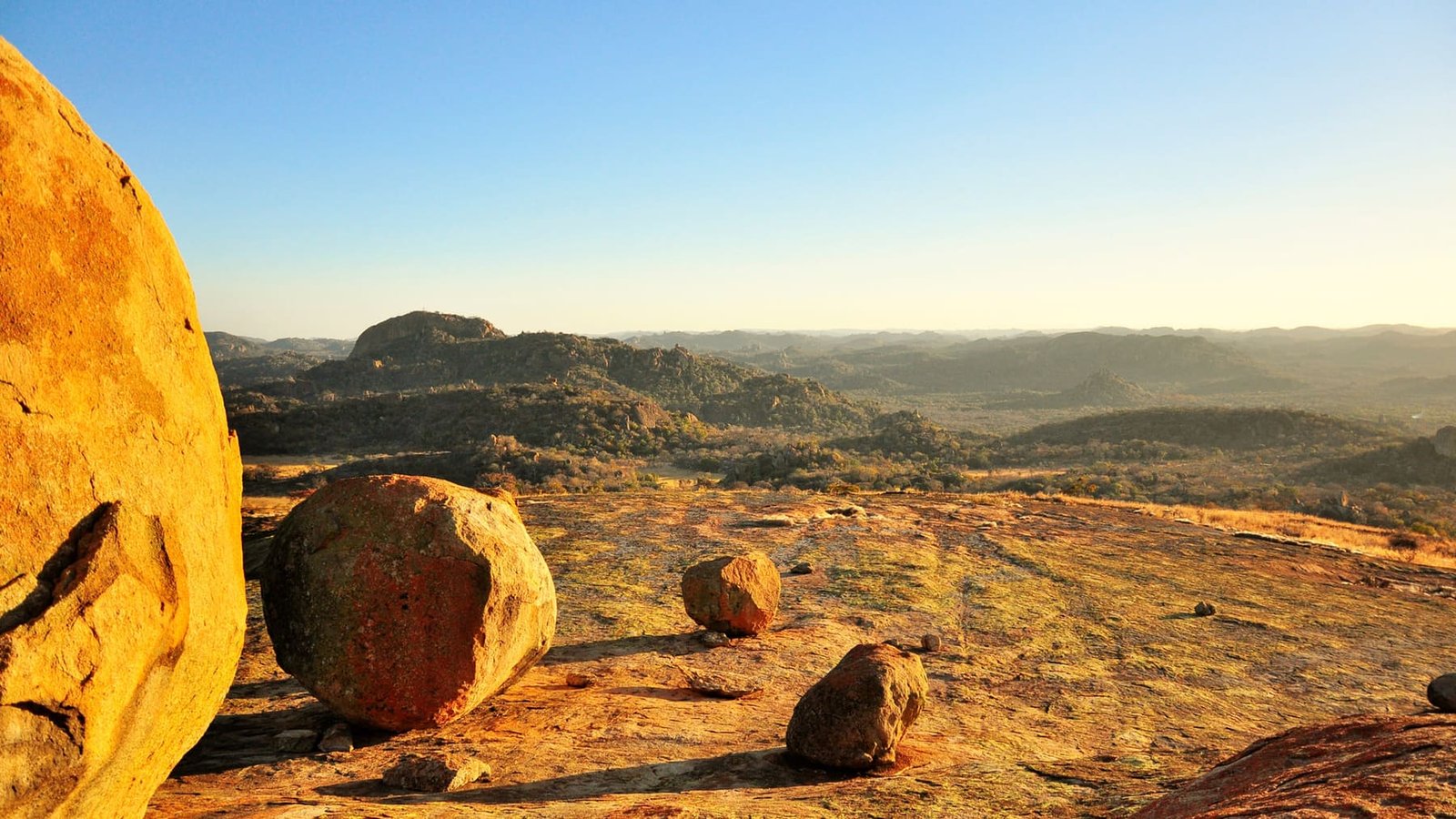
Private helicopter excursion to Kubu Island — an ancient granite outcrop rising from the pan floor, crowned with century-old baobab trees and San rock paintings
Five nights at Tau Pan Lodge in the Central Kalahari Game Reserve — deep immersion in one of Africa's most remote and least-visited wilderness areas
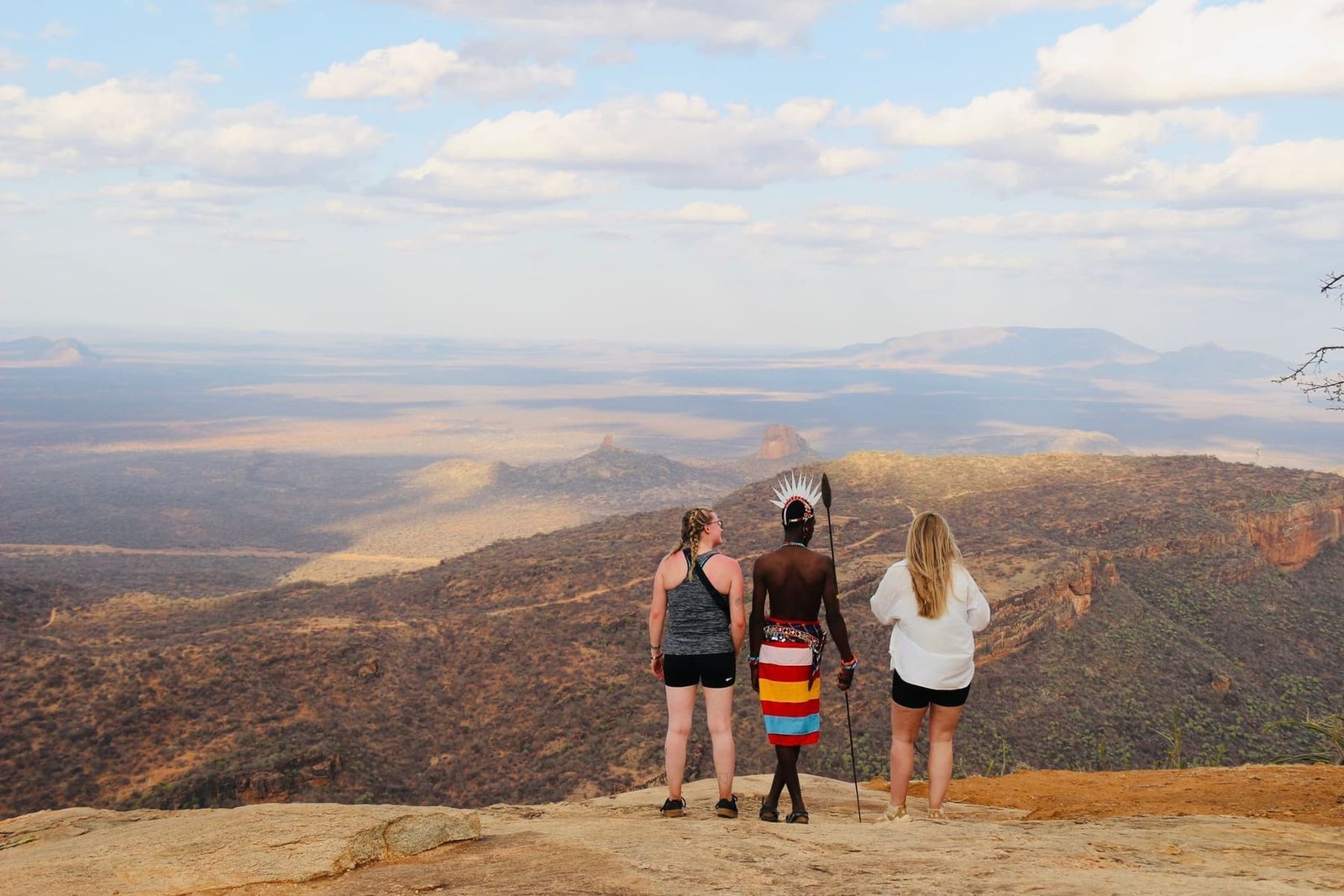
Walking safaris with San Bushmen guides — 20,000 years of accumulated desert knowledge shared through tracking, plant identification, and fire-making in the field
San cultural immersion — not a performance, but an authentic exchange: traditional crafts, spiritual stories, and the ancestral knowledge of the Kalahari's first people
Night drives through the Central Kalahari revealing its nocturnal life — bat-eared foxes, aardwolves, porcupines, and the elusive brown hyena emerging after dark
A bush dinner laid out on the Kalahari pan floor on your final evening — white linen, lanterns, the Milky Way so bright overhead it casts shadows on the sand
90-minute aromatherapy deep-tissue massage at Protea Hotel Gaborone using Botswana desert plant extracts — the perfect transition from the bush to your homeward flight
Completely all-inclusive — no surprises, no add-ons. Every activity, charter flight, spa session and visa fee is in the price
Five nights in the Kalahari — enough time to stop looking for things and start seeing them
San Bushmen guides whose ancestors have lived in this landscape for 20,000 years — knowledge no book or documentary can replicate
The Kalahari sky is among Africa's darkest — the Milky Way casts actual shadows on the sand on clear nights
Kubu Island by private helicopter — there is no more extraordinary way to arrive at one of Africa's most sacred sites
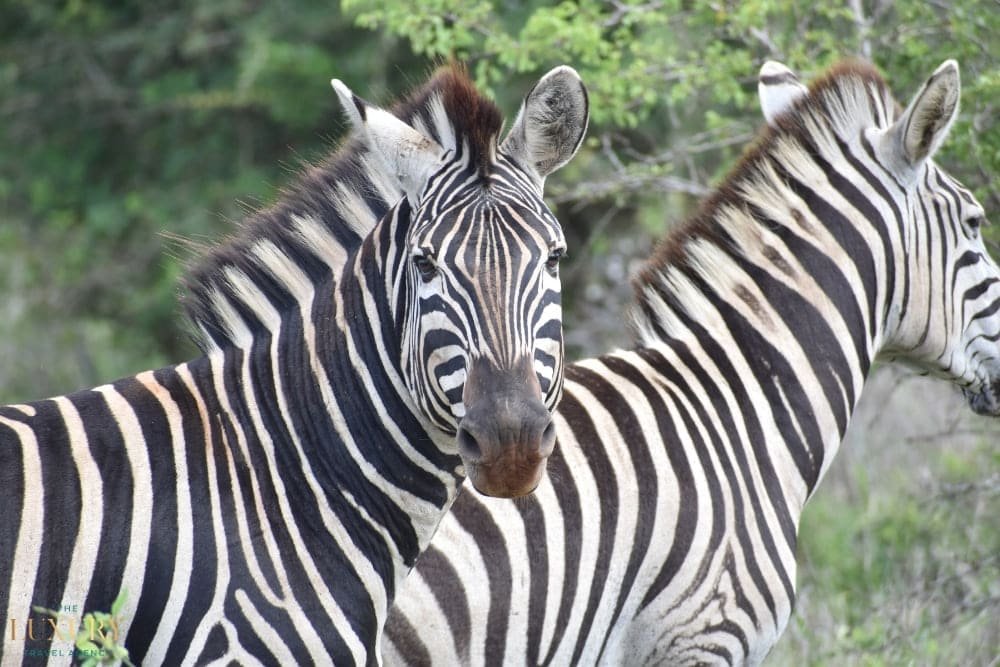
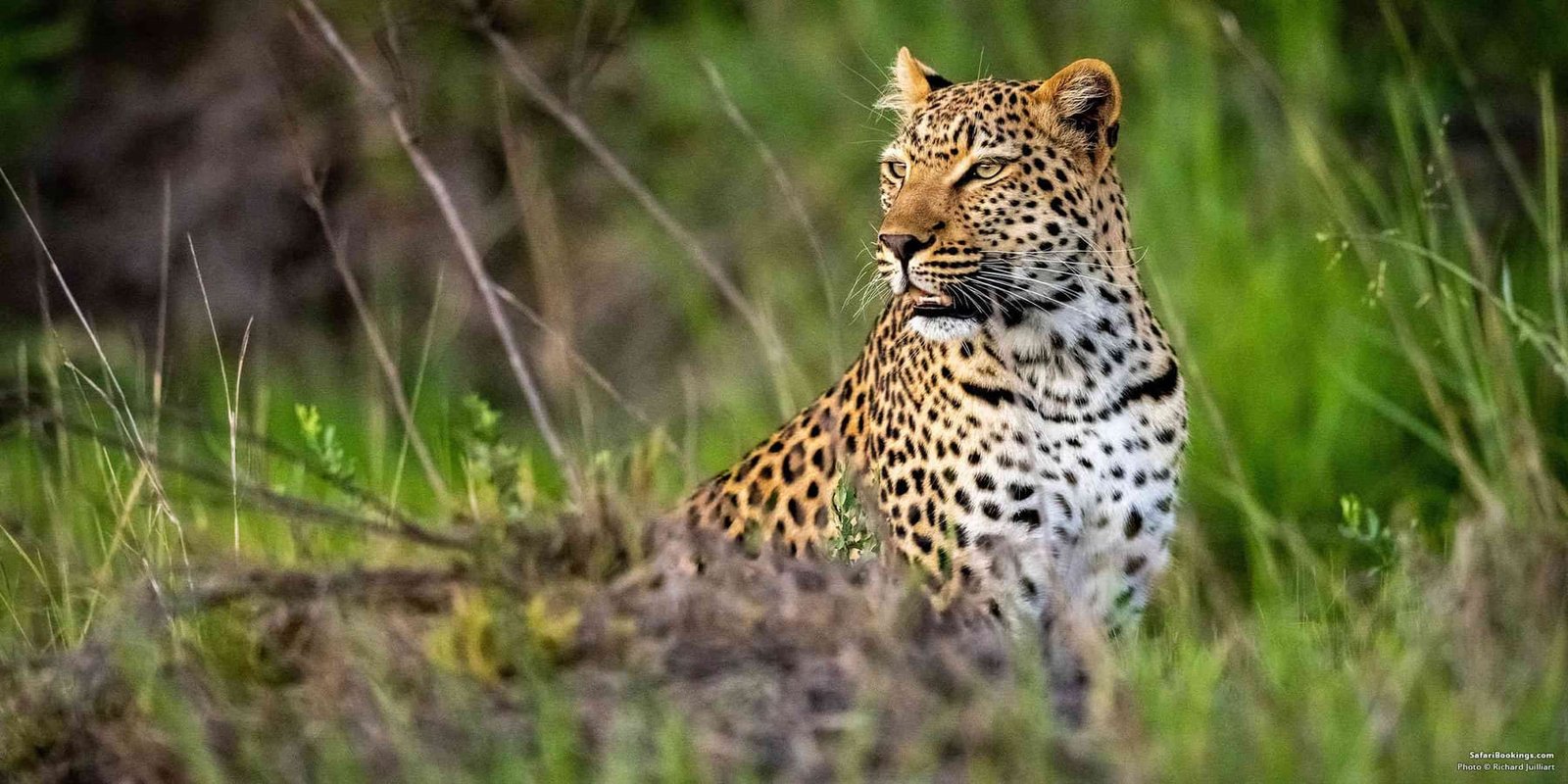
Wildlife adapted to desert extremes — desert lions, gemsbok, cheetah, and the rare brown hyena in their natural Kalahari habitat
Gaborone → Makgadikgadi Pans → Kubu Island → Central Kalahari Game Reserve → Gaborone. Day-by-day scrollspy map to follow.
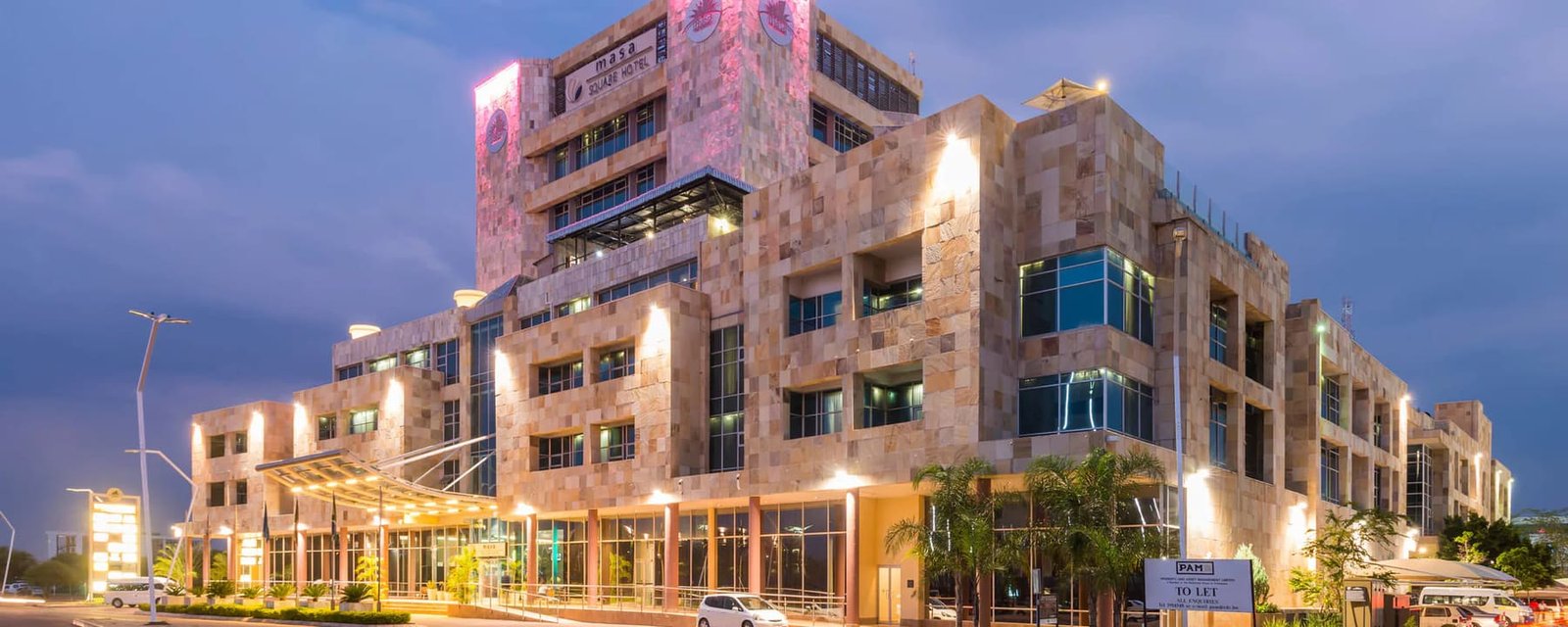
Touch down at Sir Seretse Khama International Airport in Gaborone. A Finders & Keepers Safaris representative greets you at arrivals and escorts you to your private guide transfer. The drive to the Protea Hotel by Marriott Gaborone Masa Square takes approximately twenty minutes through the city's wide avenues. Check into your suite — floor-to-ceiling windows, clean, modern lines, and views across the central square.
Your safari guide and local representative join you for a welcome briefing over dinner — maps, timelines, the Kalahari laid out before you. Your spa therapist notes your preferences for the aromatherapy deep-tissue massage scheduled at the end of the journey. A welcome dinner is served at the hotel's restaurant, and the night belongs to rest. Tomorrow, the pans begin.
After breakfast, your chauffeur transfers you to Gaborone Airport for a commercial flight to Maun — ninety minutes over the flat immensity of the Kalahari Basin. At Maun your guide and transfer vehicle are waiting. The drive to Leroo La Tau Lodge follows the Boteti River — one of this arid region's few permanent water sources — for approximately ninety minutes. Even before you reach the lodge, elephant, zebra and giraffe are likely to appear along the riverbank, the landscape already announcing itself.
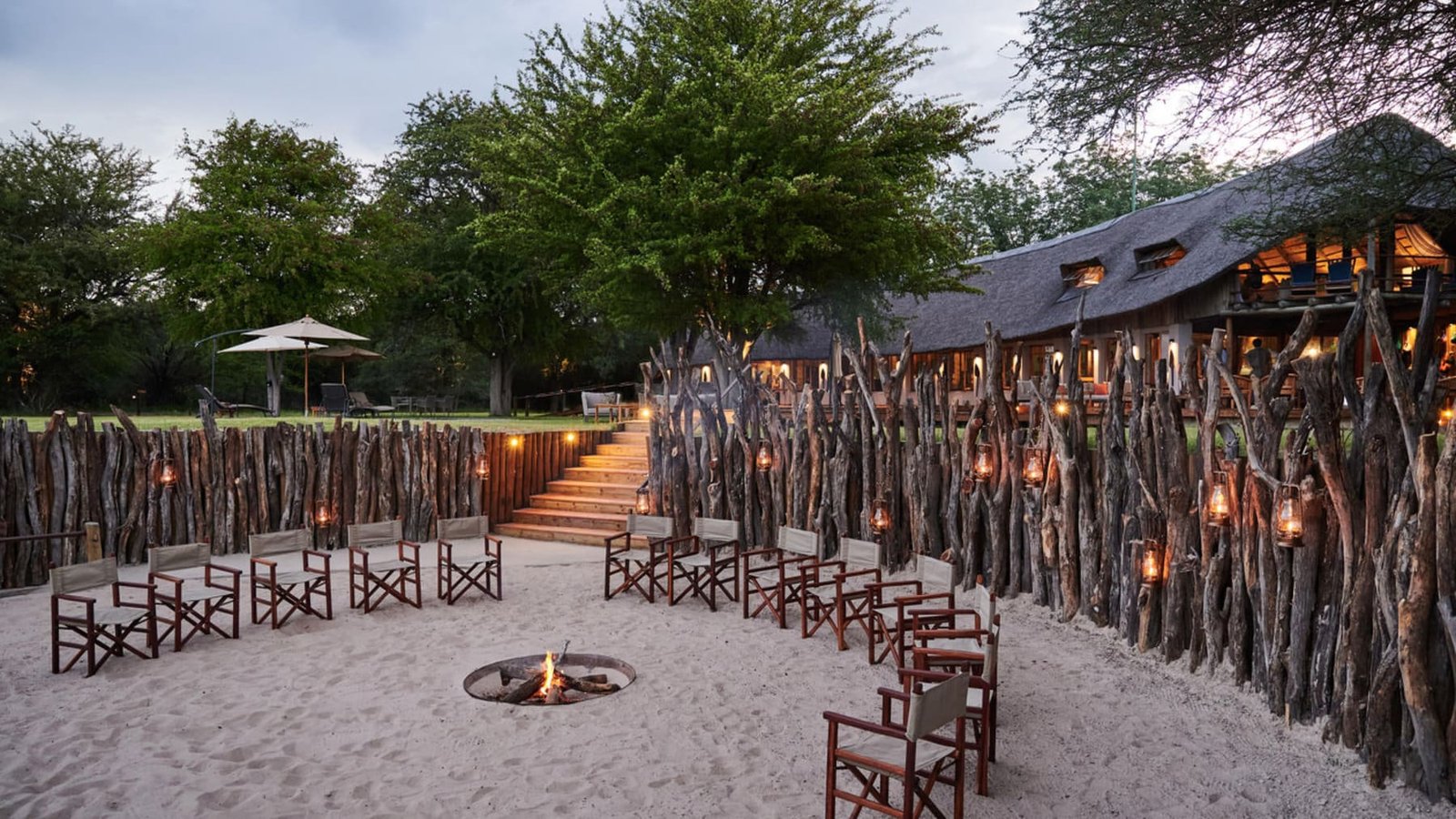
Leroo La Tau — "place of the lion" in Setswana — sits on the bank of the Boteti River, overlooking the floodplain. Arrive for lunch on the open deck with views across the water. Your first game drive departs at 4:00 PM: elephant herds at the river's edge, hippos in the deeper pools, crocodiles on the sandbars. A sundowner on the riverbank as the sky explodes in orange and purple. Return to the lodge for a bonfire dinner under an enormous Botswana sky.
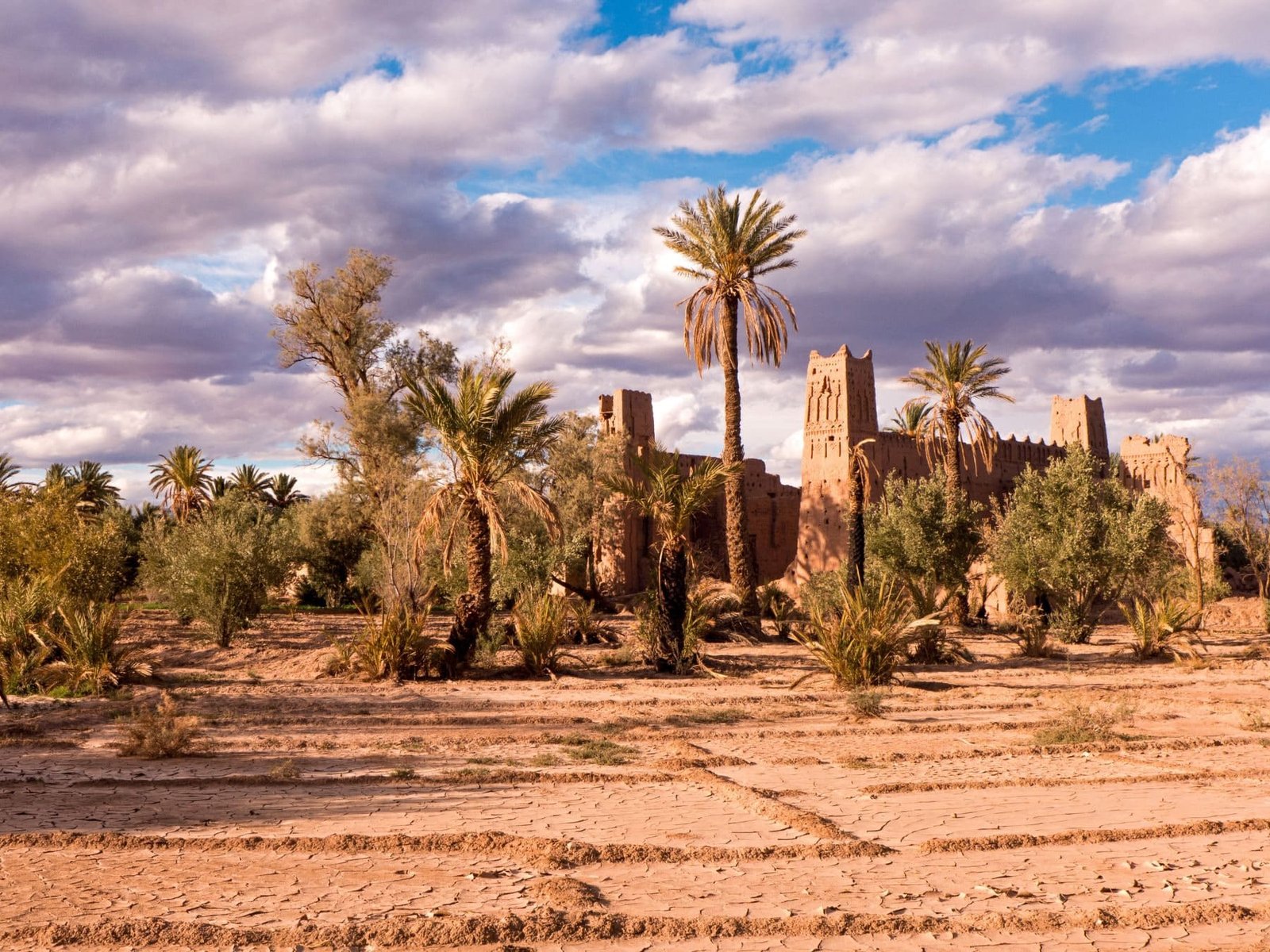
Wake at 4:30 AM. Transfer to the balloon launch site on the edge of the Makgadikgadi Pans as the sky shifts from black to deep indigo. The balloon lifts above the pan floor at first light — and the world below becomes impossible: white to every horizon, so flat and so vast that the curvature of the earth is visible from the basket. The pans are the remains of a super-lake that once covered most of southern Africa — dried by climate change over millennia into this extraordinary white expanse. From above, the cracked salt polygons and occasional solitary baobab read like something from another planet.
After landing, a champagne bush breakfast is served on the pan floor itself — white linen, crystal glasses, a full breakfast prepared in the middle of the salt. The silence is a physical thing. After returning to the lodge, rest through the midday heat. At 4:00 PM, a game drive focuses on the Boteti River's lion prides — Leroo La Tau is named for them, and they rarely disappoint. A sundowner on the riverbank. Return to camp for a bonfire dinner.
After breakfast, board a private helicopter for a flight to Kubu Island — one of Botswana's most sacred and visually extraordinary sites. The flight takes approximately thirty minutes, crossing the white expanse of the Makgadikgadi Pans at low level. From above, the scale of the salt flats becomes fully apparent: an inland sea of white stretching further than the eye can resolve.
Kubu Island is not a conventional island — it is a rocky granite outcrop rising from the pan floor, crowned with over a hundred ancient baobab trees, some more than a thousand years old. Their massive, twisted trunks create a landscape that feels as though it belongs to a different geological era. Your guide leads you among the baobabs, explaining the pan's history and the San people's sacred relationship with this place — their rock paintings still visible on some of the boulders. A private picnic lunch is served in the shade of the largest tree — champagne, gourmet food, and the white pan stretching to every horizon, the silence broken only by the wind. Return by helicopter to Leroo La Tau. A final sundowner on the riverbank. A bonfire dinner as the stars emerge over the Kalahari.
After breakfast, board a light aircraft charter from Leroo La Tau to Tau Pan Lodge in the Central Kalahari Game Reserve — approximately one hour crossing the Kalahari Basin. The flight reveals the transition from the white pan floor to the golden grasslands and acacia woodlands of the Kalahari interior. Over 52,000 square kilometres with only a handful of lodges — this is among the most remote protected areas in Africa.
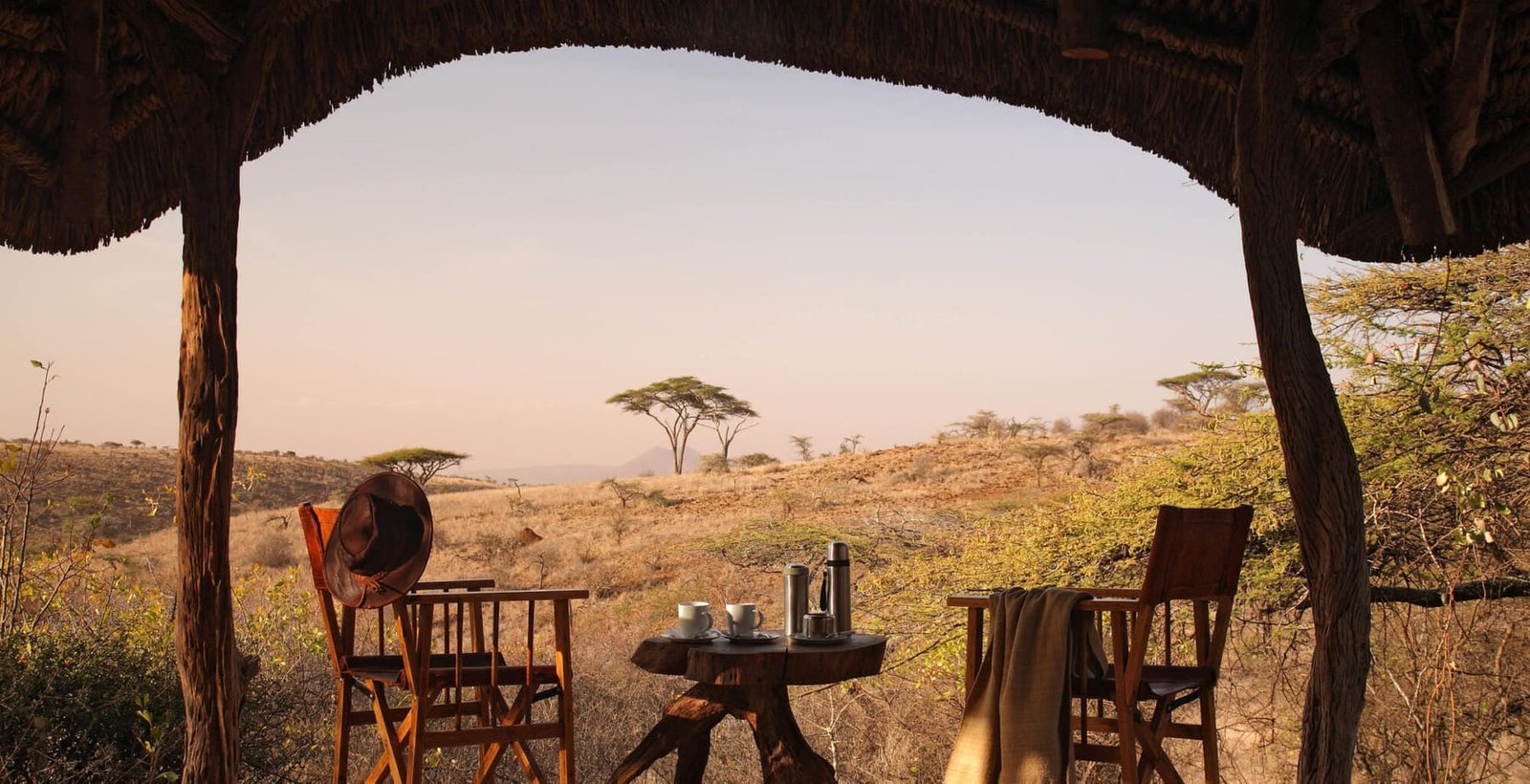
Tau Pan Lodge sits on the edge of an ancient dry lakebed, its raised decks offering uninterrupted views across the pan and the surrounding grasslands. Arrive for lunch, then settle into your suite with floor-to-ceiling windows overlooking the wilderness. Your first Kalahari game drive departs at 4:00 PM — springbok pronking across the plains, gemsbok with their long straight horns catching the afternoon light, the Kalahari horizon perfectly flat in every direction. A sundowner on the pan floor. Return to the lodge for a bonfire dinner. The sky overhead is extraordinary — the Milky Way so dense and bright it requires a moment to comprehend.
After breakfast, your San Bushman guide leads you into the acacia woodland on foot. He carries no rifle and needs none — he reads the bush the way a scholar reads a text, each footprint, birdcall, and bent grass stem a sentence in a language his people have spoken for 20,000 years. He shows you the tuber that holds emergency water in a dry riverbed, the berry that stings the tongue but cures a fever, the footprint of a brown hyena that passed two hours ago, the nest of a sociable weaver — a city of 400 birds in a single tree.
He demonstrates fire from two sticks — genuinely, without pretence. He shows you how to make a bow from a branch and a tendon. He explains the spiritual significance of the eland to the San cosmology — why the eland's fat is painted on ancient cave walls across southern Africa. The walk lasts two to three hours. Return to the lodge for lunch and a siesta. At 4:00 PM, a game drive across the Kalahari grasslands focuses on desert-adapted predators — the larger, paler lions of the Kalahari, and cheetahs hunting on the open plains. A sundowner on the pan. Bonfire dinner.
Today is a full day given to the Kalahari's rhythms. Depart early with a packed lunch for an extended game drive covering the northern reaches of the reserve — the terrain shifting from grassland to acacia scrub to ancient dry riverbeds where the sand is golden and the silence absolute. The Kalahari's wildlife is nomadic and scattered, following the seasonal rains across distances that defy fixed routes. Your guide reads the land, not a map.
Mid-morning, a bush breakfast is set up in the shade of an acacia — coffee, eggs over an open fire, the sounds of the Kalahari all around. Lunch is a picnic in a dry riverbed. The afternoon continues the drive, heading back toward the lodge as the light softens to gold. A sundowner on the pan floor. A final bonfire dinner as the stars fill the sky from horizon to horizon.
This morning is set aside for the deeper cultural exchange that only extended time in one place makes possible. Your San hosts arrive after breakfast — not as performers, but as neighbours. They show you how ostrich eggshells become beads, how acacia wood becomes an arrow shaft, how sansevieria fibre is twisted into rope strong enough to hold a snare. The craftsmanship is unhurried and precise. They explain /Kaggen — the trickster mantis-god of San mythology, a figure of mischief, wisdom, and creation who appears when things fall apart and when they come together again.
Rest through the midday heat. At 4:00 PM, depart for a game drive that extends into darkness. As the sun sets, your guide switches to a spotlight and the Kalahari reveals its nocturnal layer: bat-eared foxes with their enormous ears tilted to the sand listening for termites, aardwolves grazing on the same termites above ground, porcupines rattling through the acacia, and if fortune allows, the elusive brown hyena — one of Africa's rarest large carnivores. A sundowner as the first stars appear. A late bonfire dinner under the full extent of the Kalahari sky.
Your final full day in the Kalahari. After breakfast, a morning game drive with no agenda except to be present — to look, to listen, to absorb what nine days in this extraordinary landscape have taught. Rest through the midday heat. At 4:00 PM, your guide takes you to his favourite places in the reserve: the viewpoints where the pan stretches in every direction, the waterholes where gemsbok gather in the afternoon light, the ridges where the horizon is so flat and so far that Africa begins to feel like a planet seen from a great height.
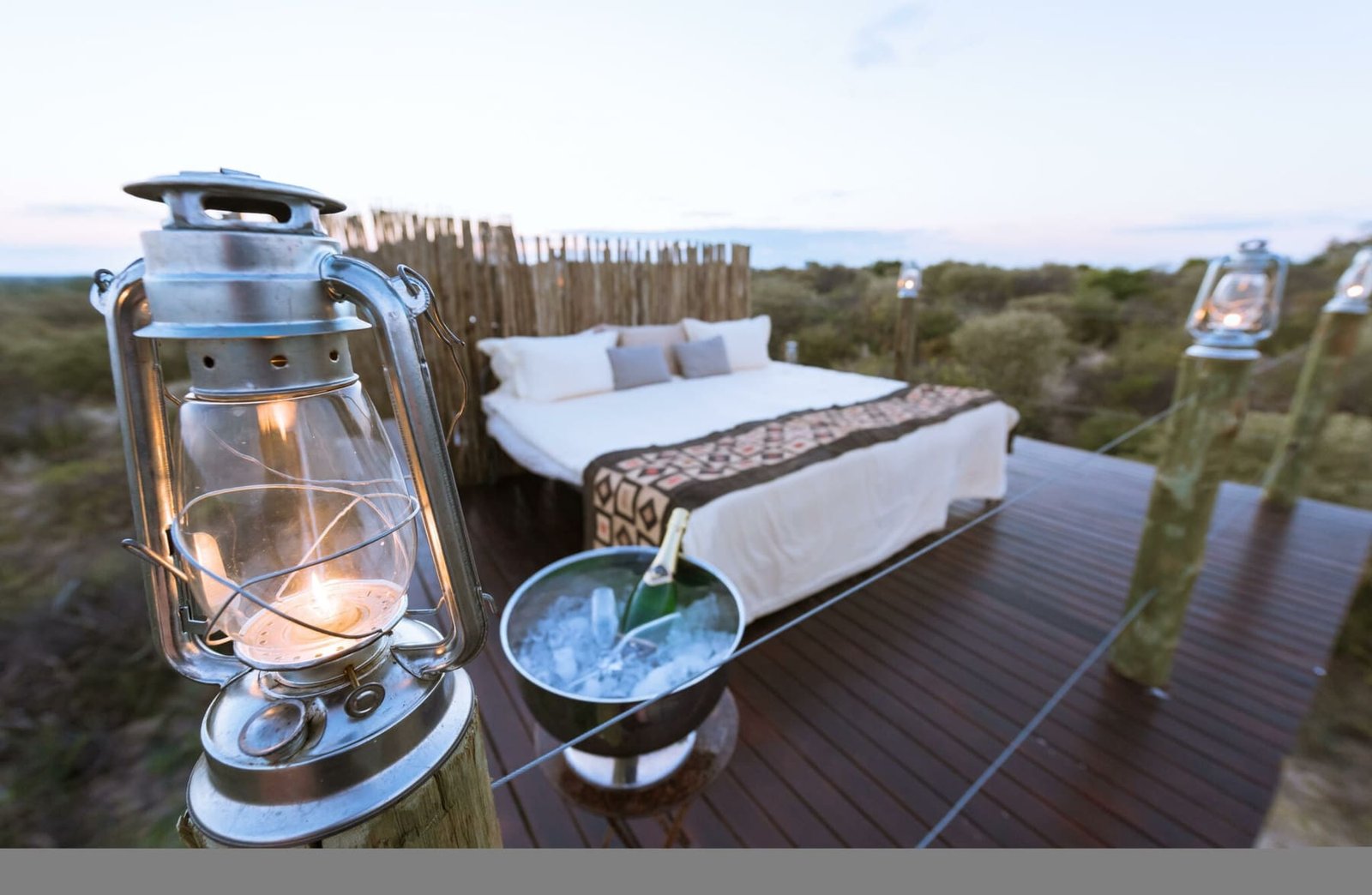
Tonight, after the sundowner, a special bush dinner is laid out on the pan floor itself — a table set with white linen, lanterns placed in a circle in the sand, the lodge's chefs preparing a gourmet feast in the open air. You eat under the Kalahari sky as it wheels slowly overhead. It is an evening that stays with you. It is the reason people come back.
After breakfast, board your light aircraft charter to Maun, then connect to a commercial flight back to Gaborone. The Kalahari recedes below you — the golden grassland, the ancient pan floor, the acacia woodland — and you carry it with you as the city appears ahead. Upon arrival, your private guide transfers you to the Protea Hotel by Marriott Gaborone Masa Square.
Your pre-arranged 90-minute aromatherapy deep-tissue massage is waiting at the Masa Square wellness centre — the therapist working with locally sourced ingredients: shea butter, marula oil, and extracts from the desert melon that the San have used as a moisturiser for generations. It is the perfect transition from the bush. A farewell dinner at the hotel's rooftop restaurant as the city lights spread below, your guide joining you for a final evening. Your airport transfer is timed precisely to your international departure — whether your flight leaves that evening or the following morning, you will be at the airport when you need to be, unhurried and well-rested.
We are here for that. Every Finders & Keepers Safaris itinerary is a starting point, not a fixed departure — the pace, the lodges, the length, the dates and the party travelling can all be reshaped around you. Tell us what you would change and a specialist will rebuild the journey and price it honestly, before you commit to anything.
Tailor This Journey →
Botswana’s empty quarter: salt flats that run to the horizon, the remote Central Kalahari and guides whose knowledge goes back 20,000 years.
A hot air balloon over the Makgadikgadi Pans, the world’s largest salt flats, then a private helicopter to Kubu Island, an ancient granite outcrop rising from the pan floor.
Walking safaris with San Bushmen guides share tracking and plant knowledge built over millennia, in an exchange rather than a performance.
Tau Pan Lodge in the Central Kalahari Game Reserve, with night drives for bat-eared foxes, aardwolves and porcupines.
Hold 2027 for half the usual deposit
Confirm any 2027 departure with a 15% deposit instead of the usual 30%, booked before 31 December 2026.
30% off the single supplement
Travelling on your own? We cut the single traveller supplement by 30% across selected 2027 departures.
Bring three, the fourth travels free
Book four guests on a 2027 group departure and the fourth guest’s safari cost is on us.
The same unforgettable journey, priced by season.
Reserve today with a low early deposit to lock in your 2027 dates and pricing.
Spread the rest across convenient instalments, at a pace that suits you.
Final balance due one month before departure — nothing more to pay once you fly.
Varies by camp, activity and national park
Duffel, safari hat, vest and hooded jumper
Water levels shape the Okavango Delta experience
The Delta's flood waters typically peak between June and August, affecting which activities (mokoro, boating, or 4x4 game drives) are available at each camp. Malaria prophylaxis is recommended.
Visa-free for most nationalities
Private, tailor-made departures on your dates, or join a small group