Madrid and Seville
The Prado privately guided, the Royal Alcázar and the climb up the Giralda, and a private flamenco performance with Andalusian cuisine.
The Prado, the Alcázar, flamenco, fado, Sintra’s palaces and the terraced vineyards of the Douro
See Pricing & Inclusions ↓OverviewA grand journey across the Iberian Peninsula — from the royal elegance of Madrid to the passionate soul of Seville, from the Atlantic light of Lisbon to the terraced vineyards of the Douro. Two countries with a shared history and genuinely distinct identities, and the food and wine that separate them.
| Best For | Travellers who want both Iberian countries and the wine that comes with them |
| Duration | 10 Days / 9 Nights |
| Route | Madrid → Seville → Lisbon → Sintra → Porto → the Douro Valley |
| Group Size | Private or small group — guided throughout |
| Price From | $13,400 per person sharing |
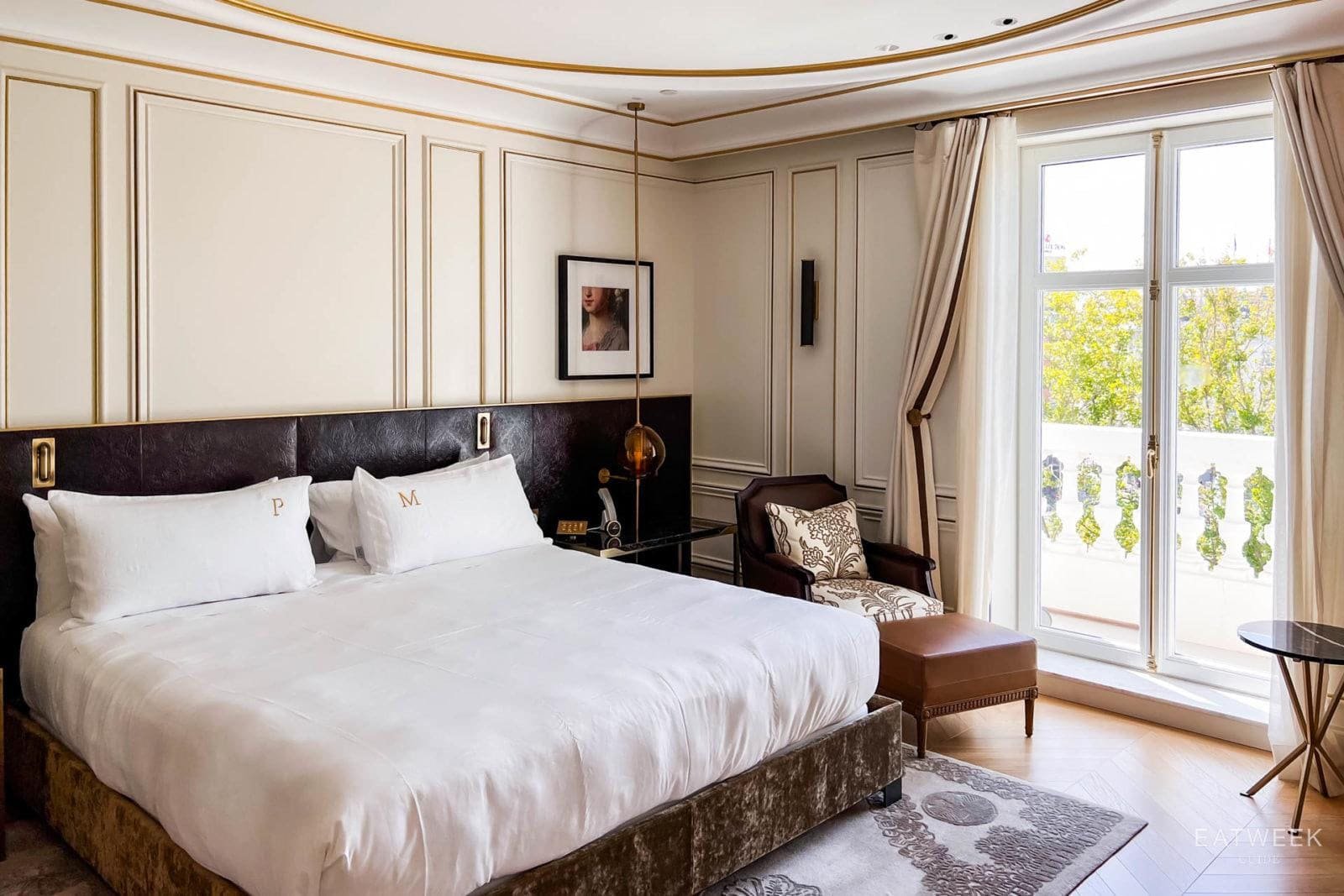
The Mandarin Oriental Ritz, in Madrid’s UNESCO-listed Paisaje de la Luz
The Prado — Velázquez, Goya, El Greco and Rubens, privately guided
The Royal Alcázar of Seville and the climb up the Giralda
A private flamenco performance with Andalusian cuisine
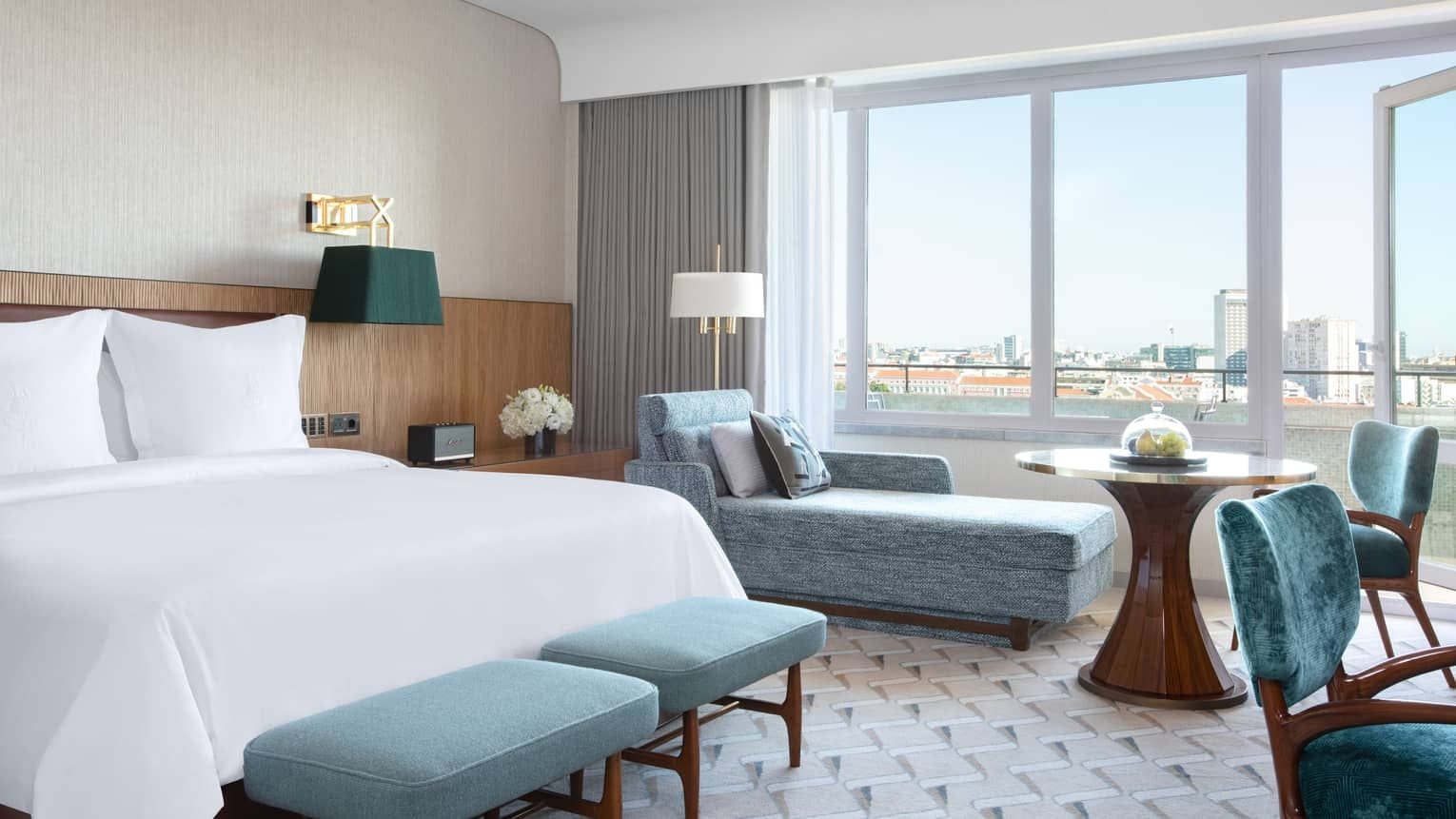
The Four Seasons Ritz Lisbon, the only Forbes Five-Star hotel in Portugal
Belém Tower and the Jerónimos Monastery — the Age of Discovery in stone
A fado dinner in the Alfama, the oldest quarter in Lisbon
Sintra’s Pena Palace and the tunnels and wells of Quinta da Regaleira
Cabo da Roca, the westernmost point of mainland Europe
A private Douro Valley day: two wineries, six wines and a river cruise
Madrid → Seville → Lisbon → Sintra → Cascais → Porto → the Douro Valley. Day-by-day scrollspy markers to follow.
Land at Madrid-Barajas and transfer to the Mandarin Oriental Ritz, a Belle Époque palace opened in 1910 at the request of King Alfonso XIII, who wanted the capital to have a hotel the equal of any in Europe. It has been putting up royalty and heads of state ever since.
The evening begins at the Puerta del Sol, the notional centre of the Iberian peninsula, then the Plaza Mayor — one of the grandest enclosed squares in Europe — and the exterior of the Royal Palace.
The Mercado de San Miguel follows, for the first taste of the country, and then the Gran Vía. Dinner is tapas, properly: jamón ibérico, patatas bravas, croquetas, tortilla española, and churros con chocolate to finish.
A private morning through royal Madrid. The Royal Palace is among the largest in Europe, and the frescoed ceilings and the royal armoury are the parts that surprise people. Then the Almudena Cathedral beside it and the Plaza de Oriente.
Through the Retiro, the great green lung of the city, past the 18th-century Puerta de Alcalá that was once the main gate into Madrid.
The afternoon is the Prado, and it deserves the whole of it: Velázquez, Goya, El Greco and Rubens, with the finest collection of Spanish painting anywhere. Standing in front of Las Meninas, or Goya’s Third of May, is the reason people come to Madrid. Dinner is Spanish and unhurried.
The AVE high-speed train south, about two and a half hours at up to 320 km/h, through central Spain into Andalusia.
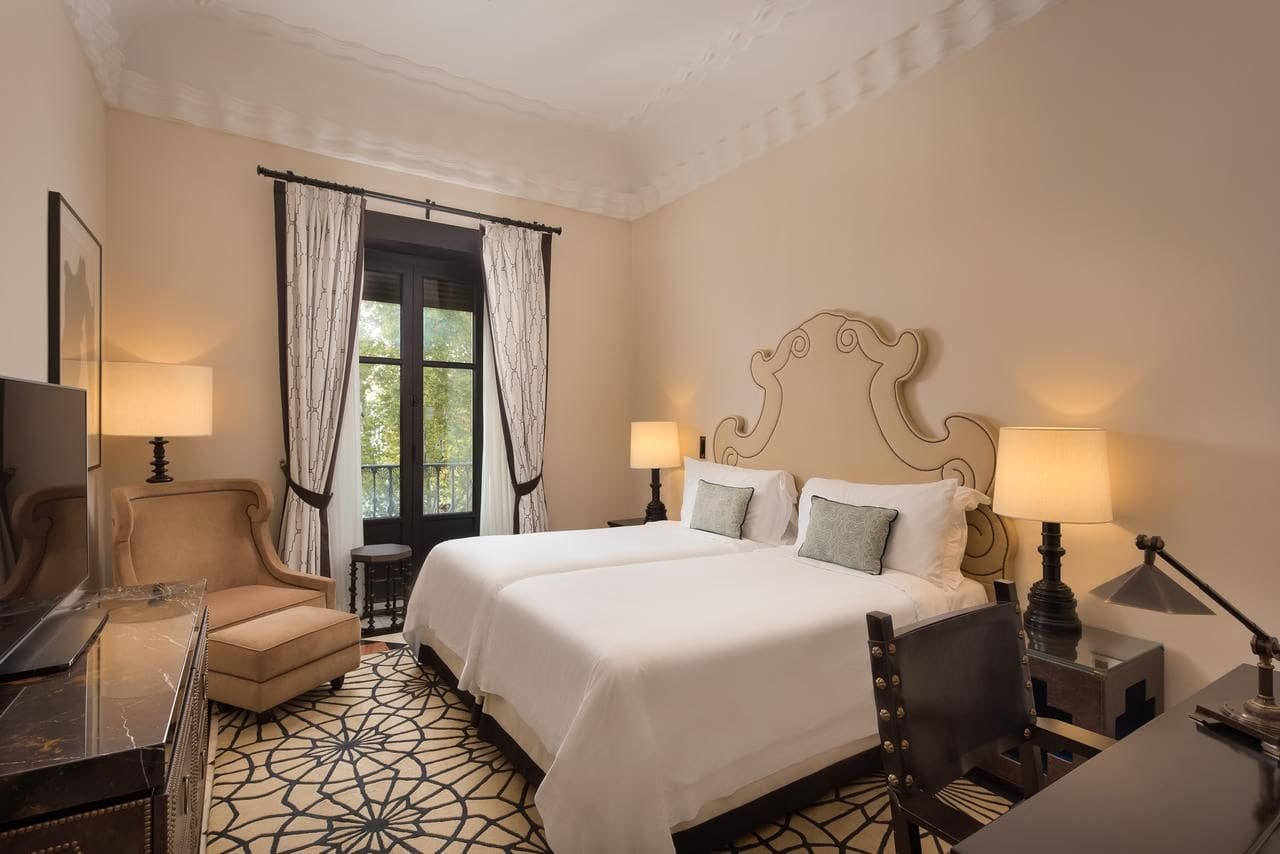
Your transfer takes you to the Hotel Alfonso XIII, built for the 1929 Ibero-American Exposition and blending Andalusian, Moorish and Castilian styles — the columned courtyard with its orange trees and mosaic fountains is the image of the place.
The afternoon explores Seville: the Plaza de España, a vast semi-circle built for the same Exposition; the María Luisa Park around it; the exterior of the cathedral; and the Santa Cruz quarter, the old Jewish district, whose lanes are narrow enough to touch both walls.
The evening is flamenco — a private or premium performance with Andalusian food. Seville is the global centre of the form, and a live performance here is raw and genuinely emotional in a way the tourist versions elsewhere are not.
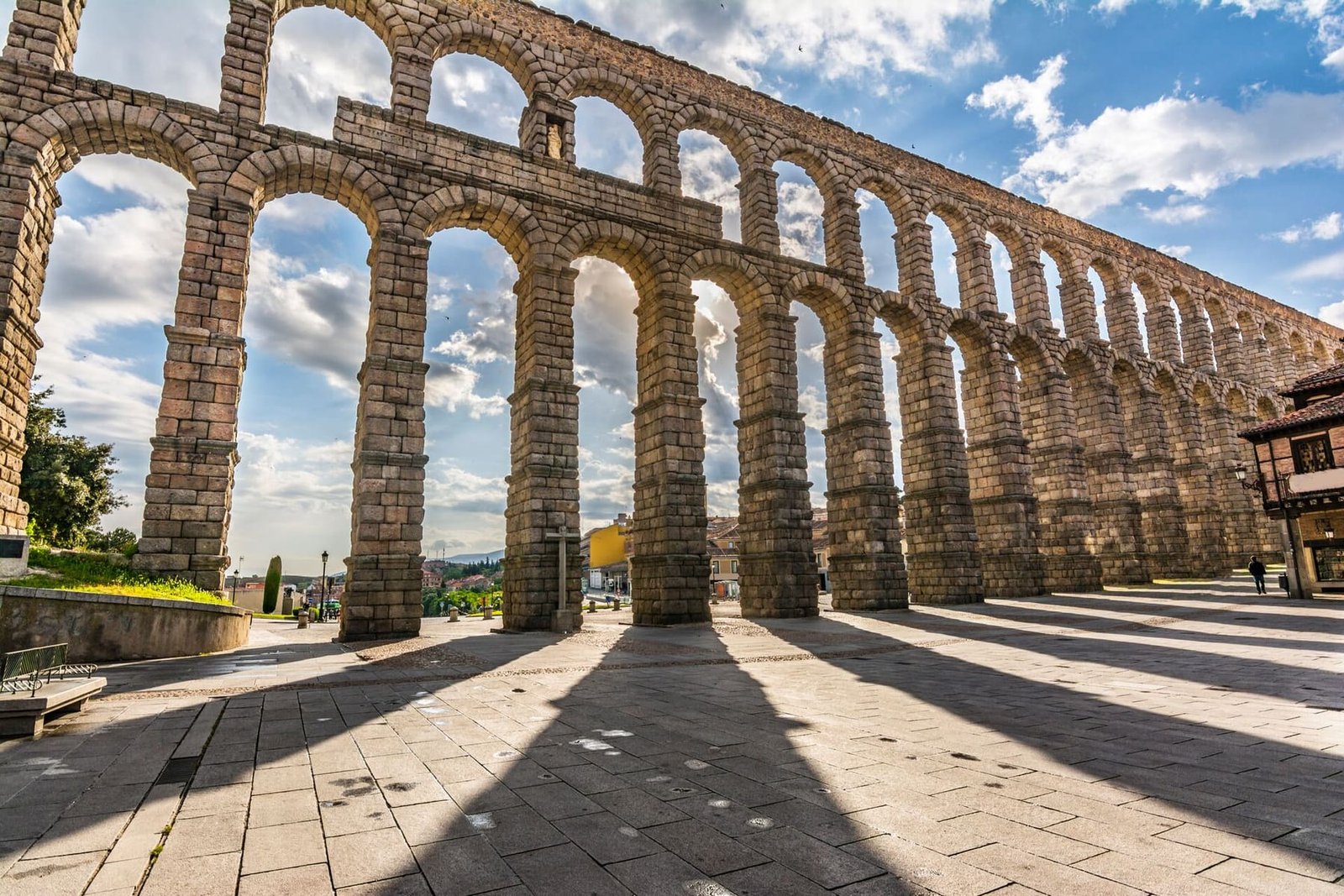
The Royal Alcázar first, and it is the single most illuminating building in Andalusia: layer upon layer of Islamic, Gothic, Renaissance and Mudéjar work, built by Christian kings using Moorish craftsmen, and still in royal use.
Then the cathedral — the largest Gothic cathedral in the world — and the climb up the Giralda, which was the minaret of the mosque that stood here before it, and which is ramped rather than stepped because the muezzin rode up on horseback. The view over the terracotta roofs is worth the climb.
The afternoon is a Spanish cooking experience or a tapas tour, learning what actually distinguishes Andalusian cooking from the rest of Spain. The evening is free for Seville, which comes alive after dark.
There is no direct train between Spain and Portugal, so the crossing is a short flight — about an hour, and far the most sensible option.
Your transfer takes you to the Four Seasons Hotel Ritz Lisbon, the only property in Portugal with a Forbes Five-Star rating for both hotel and spa.
The afternoon explores Lisbon: the Praça do Comércio facing the Tagus; the Baixa, rebuilt on a grid after the 1755 earthquake; Rossio; the Chiado and its historic cafés; and the Bairro Alto. Dinner is Portuguese — bacalhau, grilled octopus, regional cheeses, wine from the Douro or the Alentejo, and pastéis de nata.
A private morning through the Age of Discovery. Belém Tower stands in the river as the fortress that watched the caravels leave; the Jerónimos Monastery beside it is Manueline architecture at its most exuberant, paid for with the spice trade. The Monument to the Discoveries completes the set.
The afternoon is the Alfama, the oldest quarter and the only one to survive the earthquake — medieval, vertical, and best explored on foot or by the historic trams that grind up through it.
The evening is fado: a small room, a guitar and a voice. It is the heart of Portuguese culture and the single most affecting hour on the itinerary.
A private day to Sintra, a UNESCO World Heritage cultural landscape and one of the first centres of European Romantic architecture. The Pena Palace is the one everyone photographs — a 19th-century Romanticist fantasy in yellow and red built by Ferdinand II on an old monastery — and Quinta da Regaleira is the one people remember, a mystical estate of hidden tunnels, symbolic gardens and an inverted initiation well you descend into.
The afternoon follows the coast road through Estoril to Cascais, a fishing village that became the refuge of aristocrats and artists, with an old town, a marina and an Atlantic waterfront.
Then Cabo da Roca, the westernmost point of mainland Europe, where the cliffs drop into the ocean and there is nothing beyond but water. Back to Lisbon in the evening.
North by train, two and a half to three hours up the Tagus valley through the Portuguese countryside.
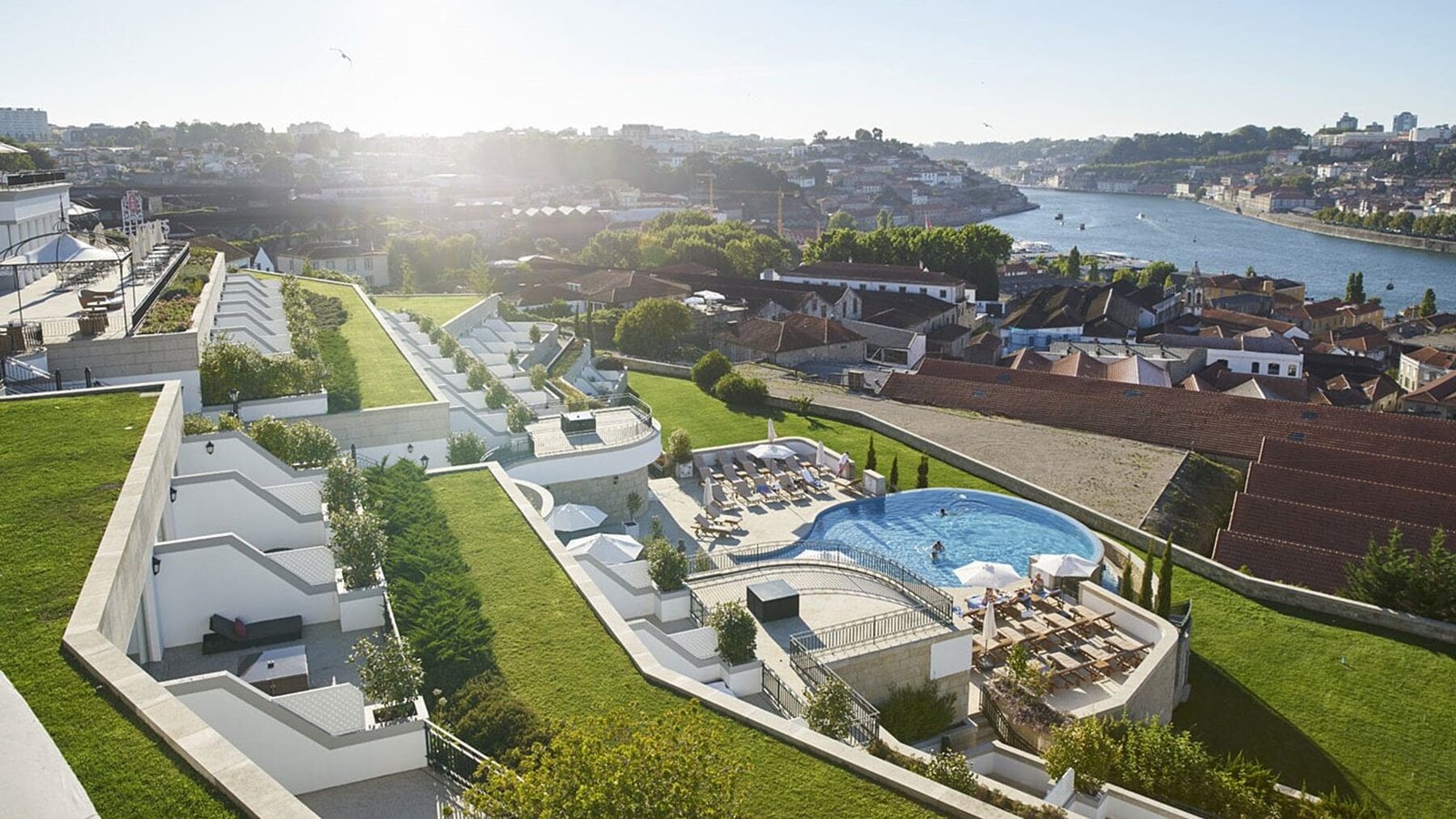
Your transfer takes you to The Yeatman in Vila Nova de Gaia — a wine hotel with panoramic views back across the Douro to Porto, and the only property in the city on the Forbes Travel Guide list.
The afternoon explores Porto: the Ribeira waterfront with its stacked coloured houses; the Dom Luís I Bridge, iron and double-decked, designed by a student of Eiffel; the cathedral; São Bento station, whose entrance hall carries twenty thousand azulejo tiles of Portuguese history; and the Clérigos Tower for the view. Dinner over the Douro.
The signature day. Out of Porto along the N222, regularly called the most beautiful road in Portugal, into the Douro — a UNESCO World Heritage wine region of century-old terraced vineyards cut into impossibly steep slopes.
Two wineries, with guided tours and a tasting of six wines including port and Douro reds, and a traditional Portuguese lunch at a family estate overlooking the vines.
The afternoon is a panoramic cruise on the river itself, forty-five minutes to an hour on very calm water with the terraces rising on both sides. Back to Porto for a farewell Portuguese dinner.
Breakfast at The Yeatman and, if the flight allows, a last walk along the Ribeira or a final glass of port. Private transfer to Francisco Sá Carneiro Airport.
We are here for that. Every Finders & Keepers Safaris itinerary is a starting point, not a fixed departure — the pace, the lodges, the length, the dates and the party travelling can all be reshaped around you. Tell us what you would change and a specialist will rebuild the journey and price it honestly, before you commit to anything.
Tailor This Journey →
Madrid, Seville, Lisbon and Porto in ten days: the Prado, the Alcázar, flamenco, Belém and the Douro Valley.
The Prado privately guided, the Royal Alcázar and the climb up the Giralda, and a private flamenco performance with Andalusian cuisine.
The Four Seasons Ritz Lisbon, Belém Tower and the Jerónimos Monastery, then Sintra and the Atlantic coast.
A stay at The Yeatman in Porto and a day in the Douro Valley.
Hold 2027 for half the usual deposit
Confirm any 2027 departure with a 15% deposit instead of the usual 30%, booked before 31 December 2026.
The same unforgettable journey, priced by season.
Reserve today with a low early deposit to lock in your 2027 dates and pricing.
Spread the rest across convenient instalments, at a pace that suits you.
Final balance due one month before departure — nothing more to pay once you fly.
Travel wallet, city guide and a good pair of walking shoes
There is no direct rail link between Spain and Portugal
Madrid and Lisbon are the only two European capitals not connected by high-speed rail, and a direct line is not expected before 2034. The fastest crossing today is a short flight, and that is how we route it — we would rather say so than pretend a nine-hour connection is scenic. Everything else on this journey runs on rail.
Schengen entry requirements apply
Private, tailor-made departures on your dates
A deposit of 30% is required to confirm your booking, with the balance due 60 days before departure. All itineraries can be tailored — extend a stay, add a destination, or adjust the pace to suit you. Comprehensive travel insurance covering trip cancellation, medical evacuation and personal effects is required for all guests. Your dedicated specialist remains on call throughout your journey for any changes or assistance you need.